DIY Water method for making coffee brewing water at home
Once an ideal home brewing station has taken shape, the next critical element to decode is the silent solvent that defines up to 98% of the soul of every cup of coffee – water.
Using tap water or bottled water randomly carries numerous chemical risks. Not only can it mask the original flavor of the coffee beans, but it may also damage expensive brewing equipment. Instead of relying on whatever water source is available, this article will guide you through the “Concentrate Solution” method. This technique allows you to recreate standard water recipes from the Specialty Coffee Association (SCA), Barista Hustle, and the Reddit coffee community accurately, safely, and with the least amount of daily effort.
Limitations of tap water and purified water
Before attempting to mix your own brewing water, we must understand why familiar household water sources are not recommended by coffee professionals for Specialty Coffee. Whether it is tap water or purified water, each type comes with its own chemical and physical limitations.
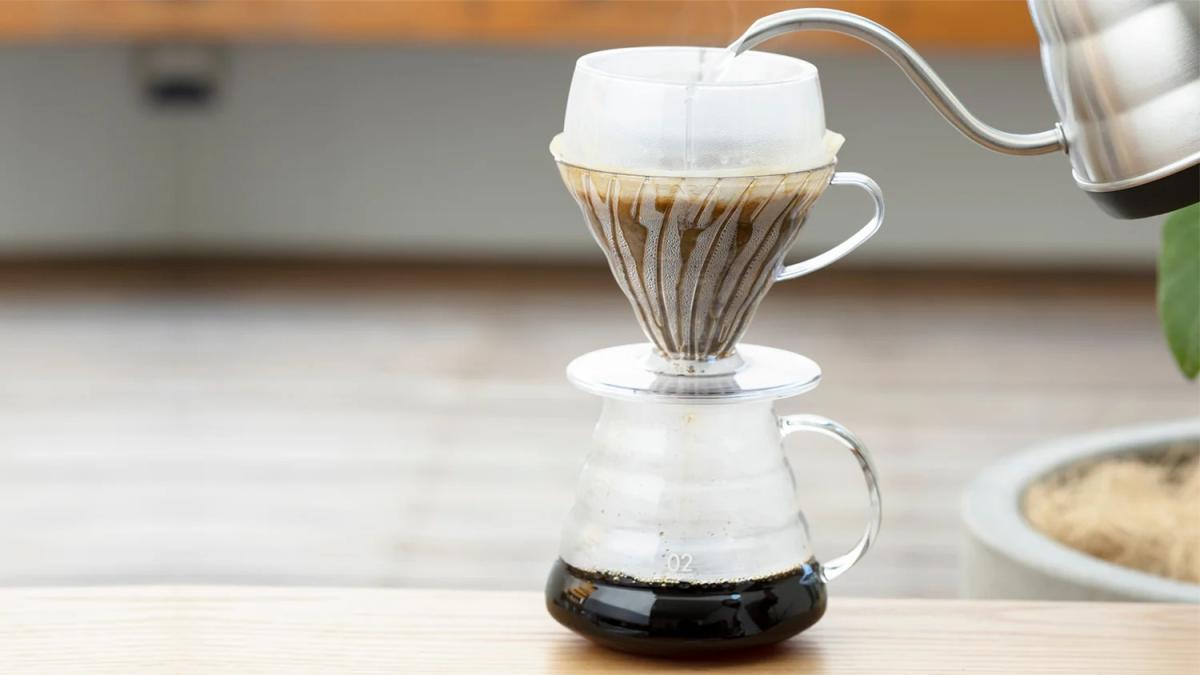
Water acts as the solvent that makes up nearly 98% of the structure of a cup of coffee. ( Image source: Cubes-asia)
The destructive effects of tap water
Municipal tap water is treated to ensure safety for everyday consumption. The most notable characteristic of this type of water is the presence of disinfecting chemicals (chlorine or chloramine) along with an uncontrolled mineral network.
When used for brewing coffee, chlorine behaves as a powerful oxidizing agent. It reacts immediately with fragile organic compounds in coffee grounds, effectively “bleaching away” delicate fruit and floral notes and leaving behind harsh bitterness or chemical-like flavors.
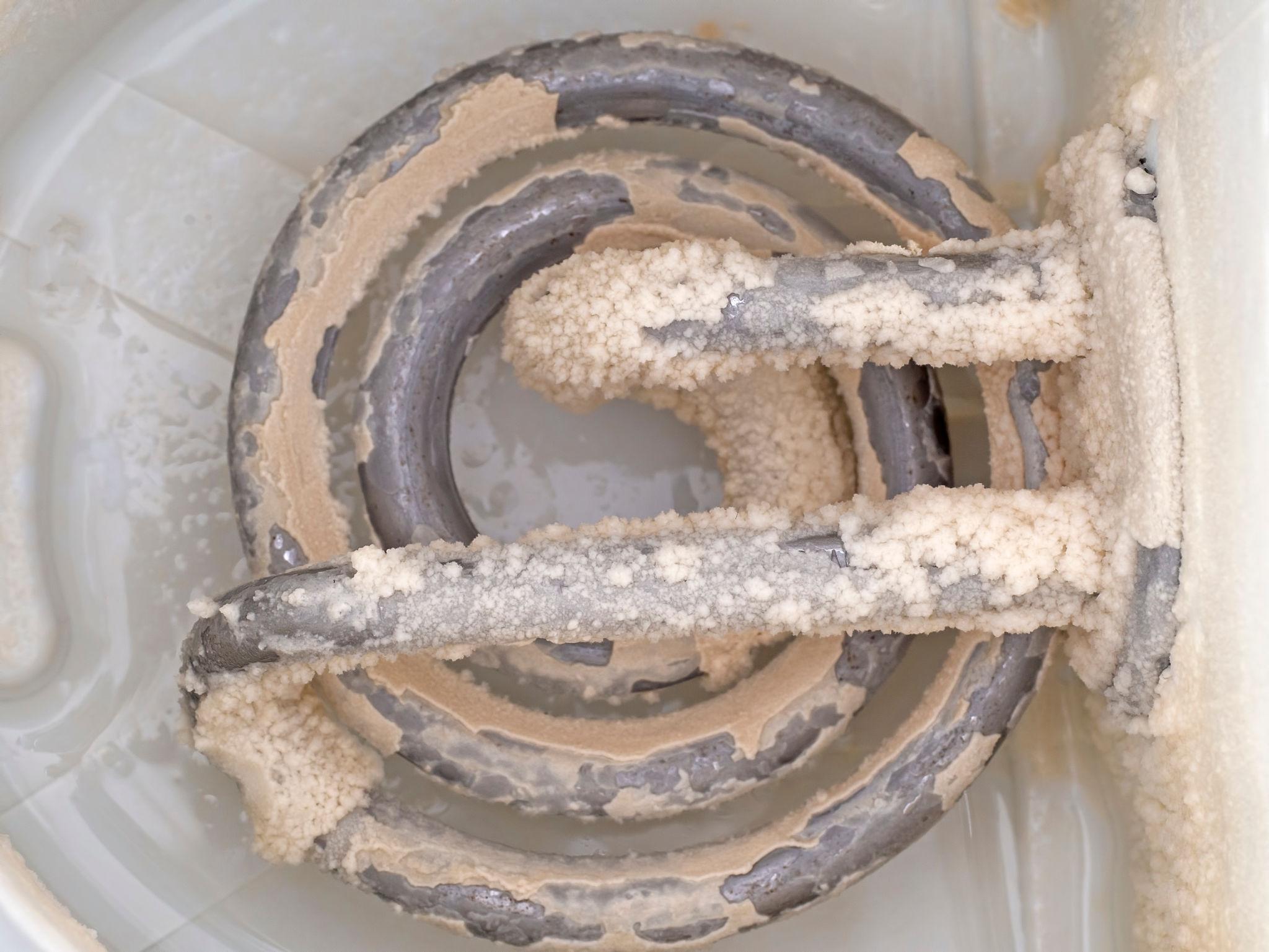
Calcium minerals in tap water may precipitate into limescale deposits when heated. (Image source: Kitchenwatertap)
In addition, tap water often contains high concentrations of calcium. When heated inside the boiler of an espresso machine, calcium precipitates and forms scale deposits. This mineral buildup adheres to the interior walls of metal pipes, reducing heat transfer efficiency, clogging solenoid valves, and ultimately damaging expensive machines. The destructive effects of calcium limescale are frequently discussed in maintenance forums such as r/espresso within the Reddit coffee community.
Risks of purified water (RO Water / Distilled Water)
To avoid limescale from tap water, many users move to the opposite extreme by using distilled water or reverse-osmosis (RO) water. Purified water has nearly 100% of its minerals removed, reducing its Total Dissolved Solids (TDS) level to absolute zero.

RO water or distilled water has a TDS level close to 0 and must be remineralized before brewing coffee. (Image source: Amorashop)
However, using water with 0 TDS directly for coffee brewing is a serious technical mistake. Mineral ions in water act as the “tools” that attach to flavor compounds and pull them out of the cellular structure of coffee grounds. Without these minerals, pure water loses its extraction capability, resulting in a cup of coffee that feels flat, empty, and lacking depth.
Even more dangerously, water with a TDS of zero has extremely strong dissolving power, often described by experts as “hungry water.” When heated inside a boiler, this type of water tends to dissolve metal ions such as copper, brass, or steel from the boiler walls in order to restore chemical balance. This process not only damages the internal structure of the espresso machine but also contaminates the water itself.
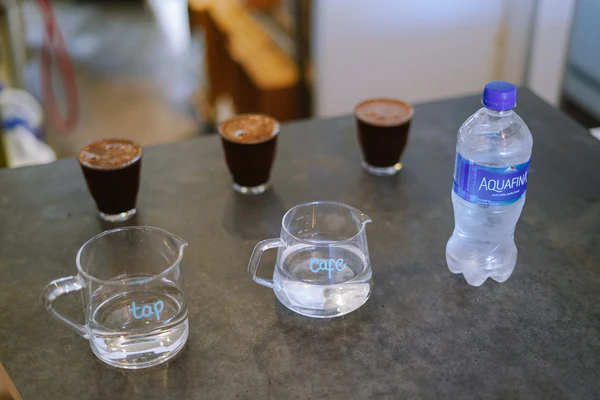
Pure water should never be used directly for coffee brewing. However, in the craft of DIY water, distilled or high-quality RO water serves as the perfect blank canvas – a clean, odorless, impurity-free base. From this safe foundation, we can deliberately add back essential minerals in scientifically controlled proportions. (Image source: Monogramcoffee)
The scientific structure of ideal coffee brewing water
To establish a perfect brewing water source, we do not need to become academic chemists. The Specialty Coffee Association (SCA) simplified this concept into a Water Chart built around two key pillars: Total Hardness and Alkalinity.
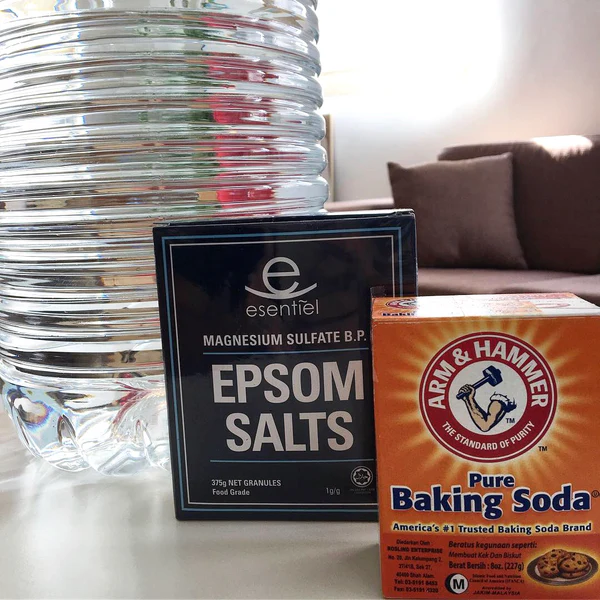
DIY water typically uses Epsom salt to provide magnesium hardness and baking soda to create alkalinity. (Image source: Beanshipper)
Instead of random mineral additions, the global DIY water movement focuses on only two extremely safe, inexpensive, and easy-to-find ingredients: Epsom Salt (providing magnesium hardness) and Baking Soda (providing bicarbonate alkalinity). Removing calcium entirely from the equation is a strategic decision that allows you to permanently eliminate the risk of limescale damaging your espresso machine.
Magnesium (from Epsom Salt): the flavor magnet
Water hardness represents the extraction strength of brewing water. In this system, magnesium ions from Epsom salt (magnesium sulfate) act as the primary extraction force.

Magnesium ions in Epsom salt enhance the extraction of flavor compounds from coffee grounds. (Image source: Anherbal)
Imagine each magnesium molecule floating in water as a tiny electromagnetic magnet. When water penetrates coffee grounds, this magnet immediately binds with oxygen-rich compounds and pulls them out. Coincidentally, these compounds are responsible for the floral aromatics, fruit notes, and refined sweetness found in coffee. Unlike calcium which tends to extract heavy, bitter flavors – magnesium behaves like a flavor specialist, prioritizing the most vibrant and delicate characteristics of specialty coffee.
Bicarbonate (from Baking Soda): the shock absorber for acidity
The second component, baking soda (pure sodium bicarbonate), establishes the water’s alkalinity. It is important to understand that alkalinity is different from pH. Alkalinity represents the buffering capacity of water.
To simplify the concept, imagine bicarbonate as a high-quality suspension system in a car. Coffee beans especially light roasts – contain thousands of natural aromatic acids. If brewing water lacks alkalinity, all these acids strike the palate directly, creating an aggressively sour taste. Bicarbonate activates its buffering role by absorbing and neutralizing excess acids. This reaction softens sharp edges and transforms harsh acidity into smooth, bright, and balanced acidity, allowing sweetness to emerge more clearly.
Bicarbonate acts as a buffer that softens acidity and balances flavor in the cup. (Image source: puresourcenutrition)
However, adding too much baking soda will over-activate the buffering system and completely suppress the coffee’s natural acids, leaving the cup dull, flat, and muted.
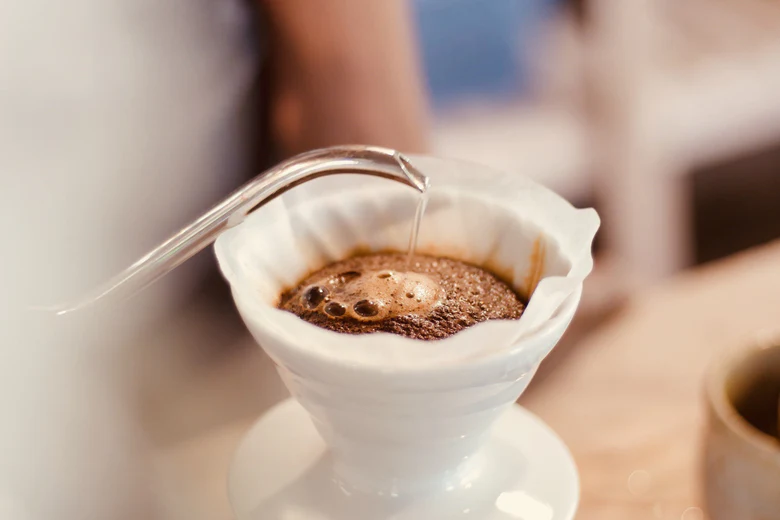
The art of water design lies in finding the perfect equilibrium between magnesium’s extraction force and bicarbonate’s buffering elasticity. (Image source: Monogramcoffee)
DIY Water Equipment for a Home Brewing Station
When moving from theory to practical implementation, the biggest barrier for many users is the lack of precision measuring tools. Standard water recipes often require weighing extremely small amounts such as 0.26 g of baking soda.
A classic mistake often discussed on r/coffee is using a standard 0.1 g coffee scale to measure mineral salts. In practice, these scales often have latency and fail to detect tiny salt particles. You may sprinkle minerals without the scale responding, then suddenly the display jumps from 0 to 0.4 g. A 0.1 g error in a recipe requiring 0.3 g represents a 30% deviation, completely destroying the intended chemical balance.
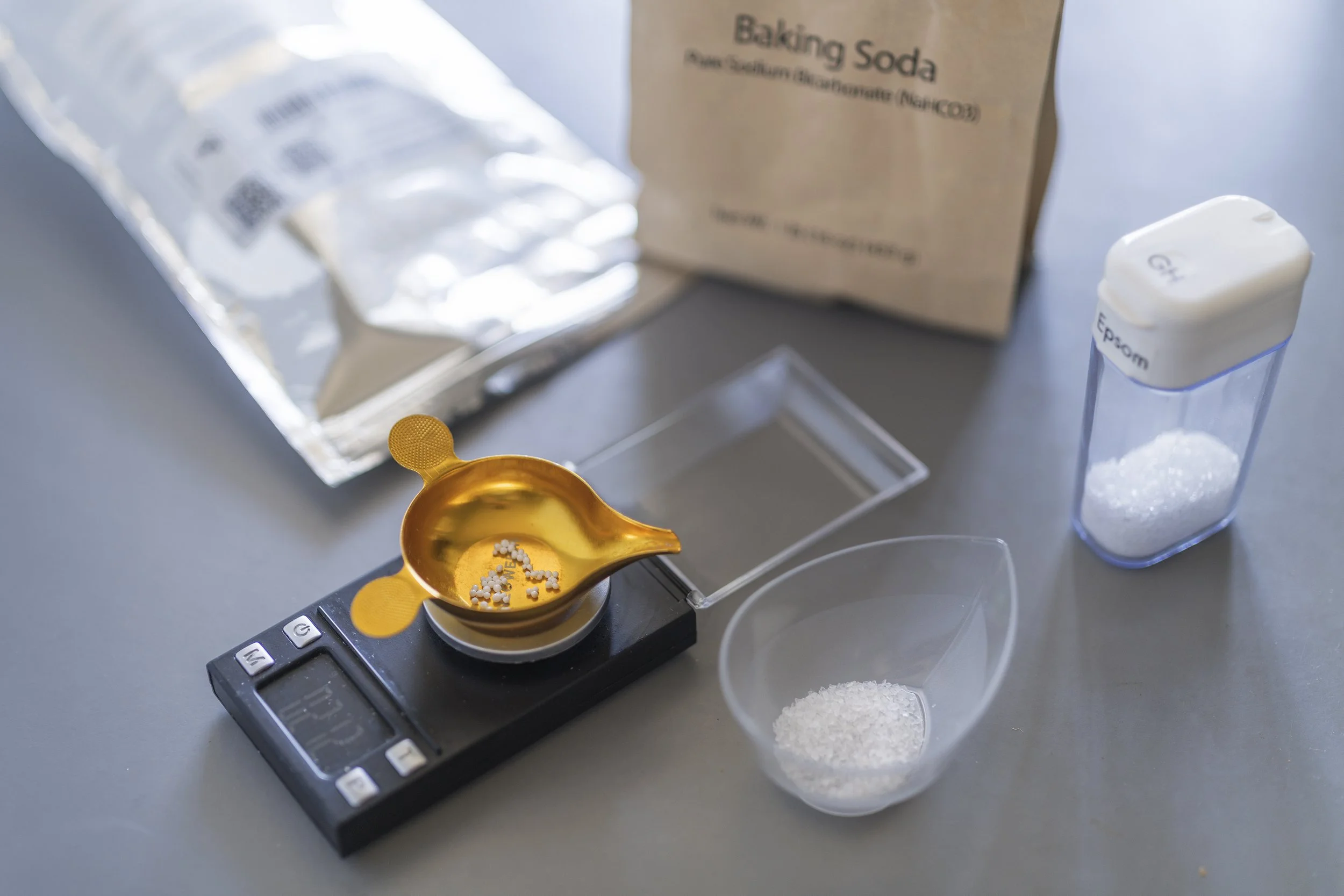
A 0.01 g precision scale is essential for accurately measuring minerals when preparing DIY water. (Image source: Robertasami)
The mandatory solution is a 0.01 g digital scale. To operate a home water chemistry station reliably, you must use a precision scale designed for jewelry measurement. This is a small investment but absolutely critical, ensuring instant responsiveness and molecular-level accuracy.
The final tool required is a pure water base to serve as the blank canvas. Bottled distilled water purchased from supermarkets is the gold standard because it has 0 TDS.
If you want to reduce plastic waste and use household RO water, you must also obtain a TDS meter. RO systems may still allow small impurities depending on membrane quality. Only when the meter reads below 10–15 ppm TDS can the water be considered clean enough for DIY water mixing.
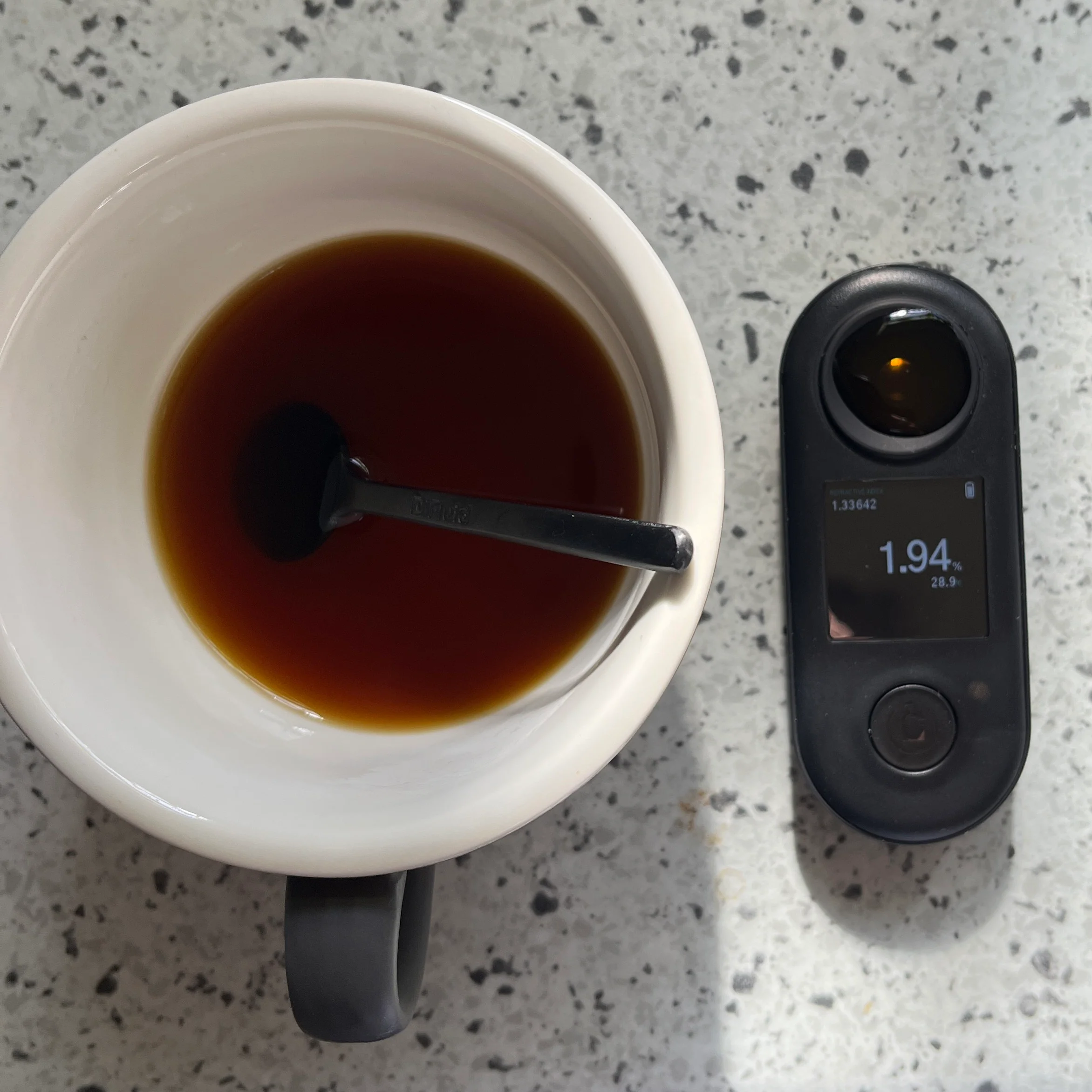
A TDS meter helps verify the mineral level of water before mixing brewing water. (Image source: Thebasicbarista)
Practicing DIY Water using two concentrate solutions
The greatest barrier that discourages home brewers from making DIY water is the daily frustration of weighing extremely small mineral amounts such as 0.13g baking soda or 0.24g Epsom salt. Even a small disturbance can ruin the measurement.
To eliminate this inconvenience entirely, experts developed the Concentrate Solution method.
Instead of weighing tiny salt amounts every morning, you prepare two concentrated mineral solutions (1000 ppm) in advance. When brewing coffee, you simply add a measured quantity of these liquid concentrates into distilled water using a normal 0.1 g scale. This approach distributes the initial measurement error across hundreds of servings and reduces the daily preparation time to less than one minute.
Step 1: Preparing the buffer solution
- Prepare a clean glass bottle with a lid (minimum 1 liter capacity). Place it on the 0.01 g scale and tare it to zero.
- Weigh 1.68 g of baking soda (must be pure sodium bicarbonate; never use baking powder, which contains starch and dry acids).
- Slowly add distilled water until the total weight reaches 1000 g.
- Seal the bottle and shake until the powder dissolves completely. Label the bottle: “BUFFER – BAKING SODA.”
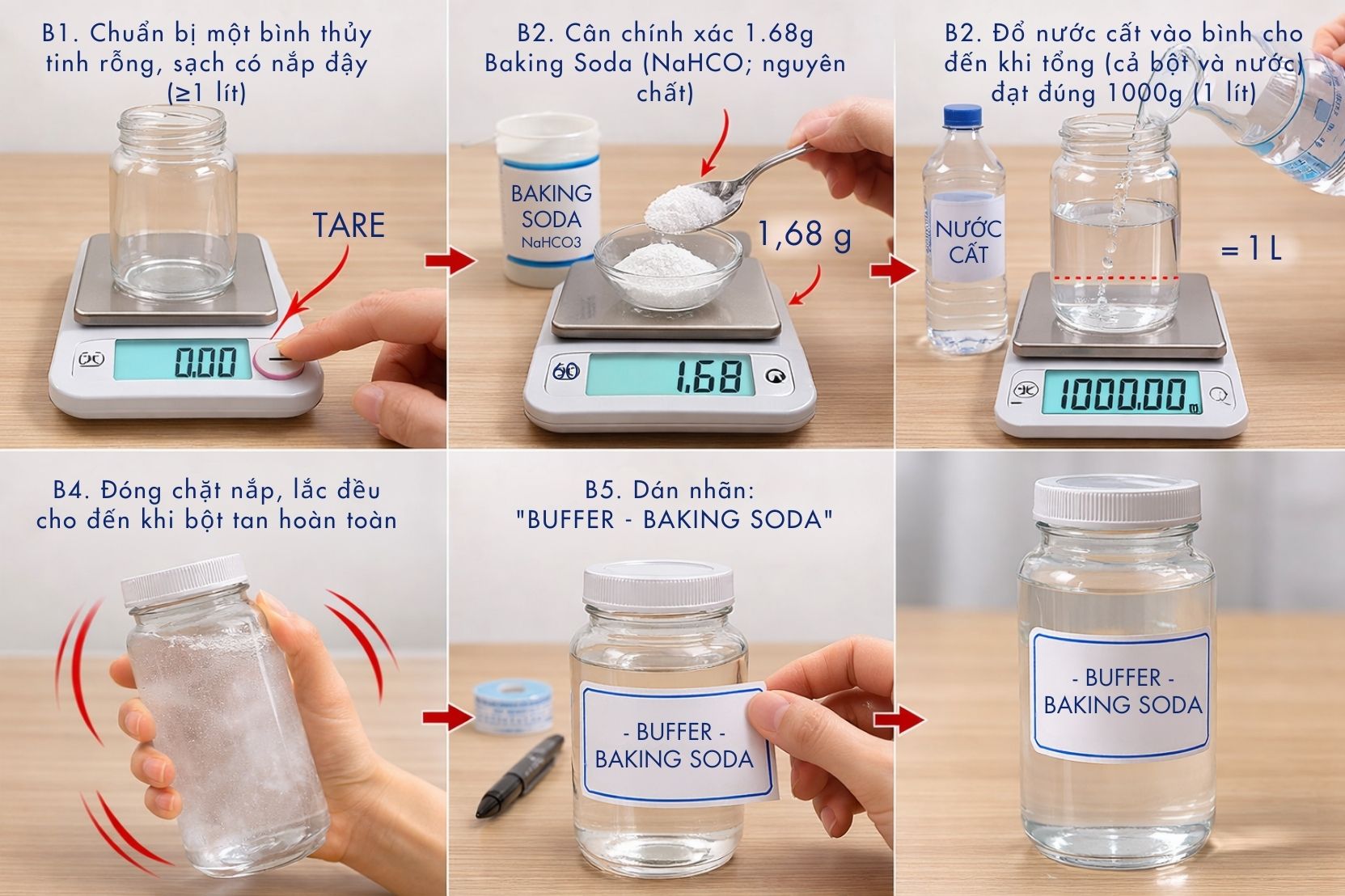
Image generated using AI
Step 2: Preparing the hardness solution
Place another 1-liter glass bottle on the scale and tare it.
Weigh 2.45 g of Epsom salt (magnesium sulfate). This unusual number accounts for the fact that natural Epsom salt crystals contain bound water molecules. Chemists at Barista Hustle adjusted the formula to ensure accurate magnesium concentration.
Add distilled water until the total weight reaches 1000 g.
Shake vigorously until the crystals dissolve completely. Label the bottle: “HARDNESS – EPSOM SALT.”

Image generated using AI
Because this mixture contains only distilled water and inorganic salts (with no organic carbon sources), bacteria and mold cannot grow. These concentrate solutions can be stored safely at room temperature or refrigerated for several months.
Applying three classic custom water recipes
At this point, your brewing station contains three components: the BUFFER solution, the HARDNESS solution, and a container of distilled water.
By adjusting the ratios of these two concentrates, you can recreate almost any water profile in the world. Below are three of the most widely respected recipes in specialty coffee communities. All measurements below produce exactly 1 liter (1000 g) of brewing water.
Recipe 1: Barista Hustle Standard Water
This formula closely follows the SCA water chart and is designed to maximize extraction strength, producing a full-bodied cup while maintaining balance. It works especially well with medium-roasted beans.
- Mix: 40.1g BUFFER solution + 68.6g HARDNESS solution + 891.3g distilled water.
Recipe 2: Rao Water (The Ultimate Weapon for Light-Roast Pour-Over)
Developed by researchers Jonathan Gagné and Scott Rao, this recipe is beloved in the r/pourover community. It intentionally increases alkalinity to soften the aggressive acidity typical of light roasts, allowing floral aromatics and fruit sweetness to shine with elegance.
Mix: 50.1g BUFFER solution + 75.7g HARDNESS solution + 874.2g distilled water.
Recipe 3: 70/30 Water (Ultimate Protection for Espresso Machines)
The r/espresso community calls this the golden ratio. With our 1000 ppm concentrate solutions, the math becomes simple: 1 gram of solution equals 1 ppm concentration. This recipe provides 70 ppm magnesium hardness to generate rich crema and 30 ppm alkalinity to protect the boiler. Because it completely eliminates calcium, this formula prevents limescale permanently.
Mix: 30g BUFFER solution + 70g HARDNESS solution + 900g distilled water.
(If preparing a larger container (for example a 3.78-liter gallon), simply multiply all measurements by 3.78.)
To conclude this article,
Setting up DIY brewing water is no longer a distant or complicated chemical concept. By applying the concentrate solution method, you transform a complex process into simple, precise liquid measurements that are fast, accurate, and safe. Once the final barrier of water quality is removed, your home brewing station becomes fully capable of unlocking the complete flavor potential hidden inside the world’s finest specialty coffee beans.