Setting Up a Home Coffee Station with the “Single Dose” Paradigm
Returning from Part 1 and extending the concept of the “Operational Triangle” in Home Coffee Station Design, Part 2 introduces advanced strategies for intelligently “hacking” storage and workflow in spatially constrained kitchen environments.
Designing a Coffee Station to Eliminate Redundant Motion
Did you know that optimizing micro-steps can reduce 5–20 seconds per brewing cycle? While seemingly minor, this fluidity preserves cognitive energy and maintains a relaxed psychological state during morning preparation.

A streamlined Single Dose brewing station optimizes both flavor integrity and spatial efficiency.
Eliminate Hand Switching During Brewing!
In professional brewing practice, every unnecessary transfer of tools between the left and right hand constitutes redundant motion. Such inefficiencies increase the risk of grounds spillage and disrupt procedural rhythm. Championship-level baristas often assign fixed roles to each hand to maintain biomechanical consistency.
Workflow models shared by global barista champions such as Emi Fukahori of MAME emphasize that spatial organization determines hand trajectory. A standardized right-to-left (or left-to-right) workflow without cross-hand redundancy may be structured as follows:
- Left Hand – Anchor Function
The left hand continuously stabilizes and carries the portafilter. It removes the portafilter from the group head, transfers it to the grinder for dosing, and stabilizes it on the tamping mat. - Right Hand – Active Manipulation
The right hand wipes the basket dry, performs WDT distribution, and applies vertical tamping force.
Combined with a linear layout – Grinder (left) – Tamping Station (center) – Espresso Machine (right) – this creates a continuous mechanical sequence. The operator neither steps backward nor twists across the body axis. If tiptoeing or hand-switching occurs during espresso preparation, the station layout requires redesign.
Clutter Disrupts Flow!
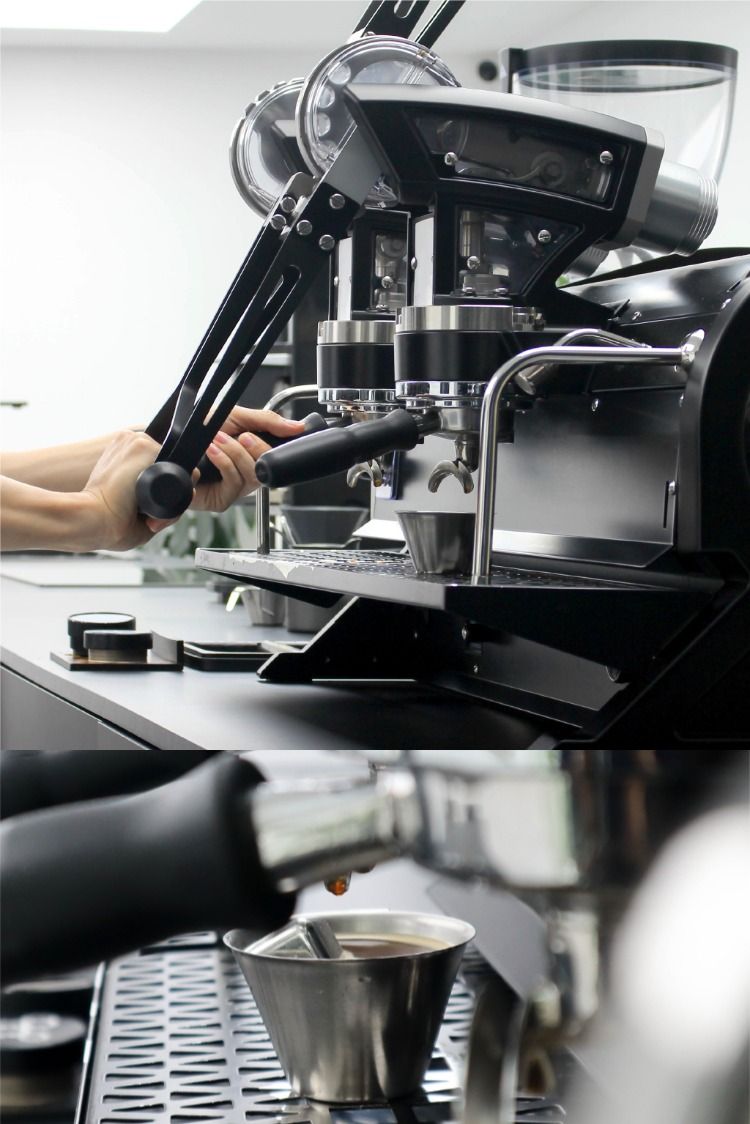
Clutter is the most critical threat to workflow stability and procedural consistency.
Clutter is the primary adversary of an efficient workflow. An unstructured workstation forces the brain to constantly scan the environment for misplaced tools. Even millisecond-level cognitive distraction interrupts psychological flow state.
A misplaced wet towel or stray brush not only compromises professional discipline but also increases the risk of damaging expensive equipment. Each tool must have a fixed “home,” and the operational rule is immediate return after use.
Implementing the Single Dose Model for Maximum Flavor and Minimal Space
Over the past decade, home coffee enthusiasts have shifted from large hopper-fed grinders to the “Single Dosing” model-precise grinding of one measured dose per extraction.
Why Single Dose?
Prevention of Flavor Degradation: Beans stored in transparent plastic hoppers oxidize rapidly, losing volatile aromatic compounds. In Single Dose workflow, beans are preserved in opaque vacuum containers and weighed precisely (e.g., 18 g or 20 g) immediately prior to grinding, preserving freshness.
Elimination of Retention: Traditional hopper grinders retain 3–8 g of stale grounds in the grinding chamber. These residues contaminate subsequent extractions. Single Dose grinders are engineered with steep discharge geometry to minimize retention—input mass approximates output mass. No purge waste, no stale carryover.

The Single Dose model eliminates bulky hoppers, minimizes grind retention, and preserves bean freshness.
Single Dose implementation requires not only different equipment but a restructured workflow grounded in mechanical precision and scientific reasoning. Community discussions on platforms such as Quora and Reddit frequently illustrate optimized procedural sequences.
| Step | Mechanical Action | Scientific Basis & Ergonomic Rationale |
|---|---|---|
| 1. Bean Weighing | Weigh exact dose (e.g., 18.0 g) before grinding | Eliminates dose variability. Maintains consistent brew ratio. Removes need for excessive redistribution or waste. |
| 2. RDT Application | Spray 1–2 fine mists of purified water onto beans; gently agitate | Grinding generates friction-induced electrostatic charge, causing clumping and particle dispersion. RDT neutralizes static, improving particle cohesion and station cleanliness. Eliminates need for brushing. |
| 3. Grinding | Start grinder motor first; gradually feed treated beans | Utilizes stabilized motor torque. Many single-dose grinders include anti-popcorning lids for safety and cleanliness. |
| 4. Chamber Purge | Activate bellows 1–2 times to expel residual grounds | Removes need for mechanical tapping, preserving grinder integrity and aesthetics. |
| 5. Distribution | Transfer grounds via dosing funnel into portafilter; perform WDT | Funnel prevents spillage. WDT breaks micro-clumps and homogenizes particle bed, reducing preferential flow pathways. |
| 6. Tamping | Apply single vertical compression on tamping station | Establishes structural resistance against ~9 bar extraction pressure. Record extraction time and yield for calibration. |
A key advantage: elimination of a large hopper dramatically reduces grinder height, allowing Single Dose grinders to fit beneath low apartment cabinetry.
“Hacking” Compact Spaces for Intelligent Storage
Increasing urban density means kitchen counter areas-especially in studio apartments or small condominiums-are becoming significantly reduced. When you have less than one meter of counter length, placing a 30 kg espresso machine, grinder, scale, knock box, and numerous accessories can quickly turn the space into a “battlefield.” The solution is to shift from horizontal surface use to multidimensional (vertical) space.
Concealing the Knock Box Strategically
The knock box is an essential accessory for ejecting the wet coffee puck after extraction. However, traditional cylindrical or square knock boxes occupy a large countertop footprint and may become a potential source of moisture and bacterial contamination. To optimize space, advanced coffee communities have developed and implemented innovative design variations.
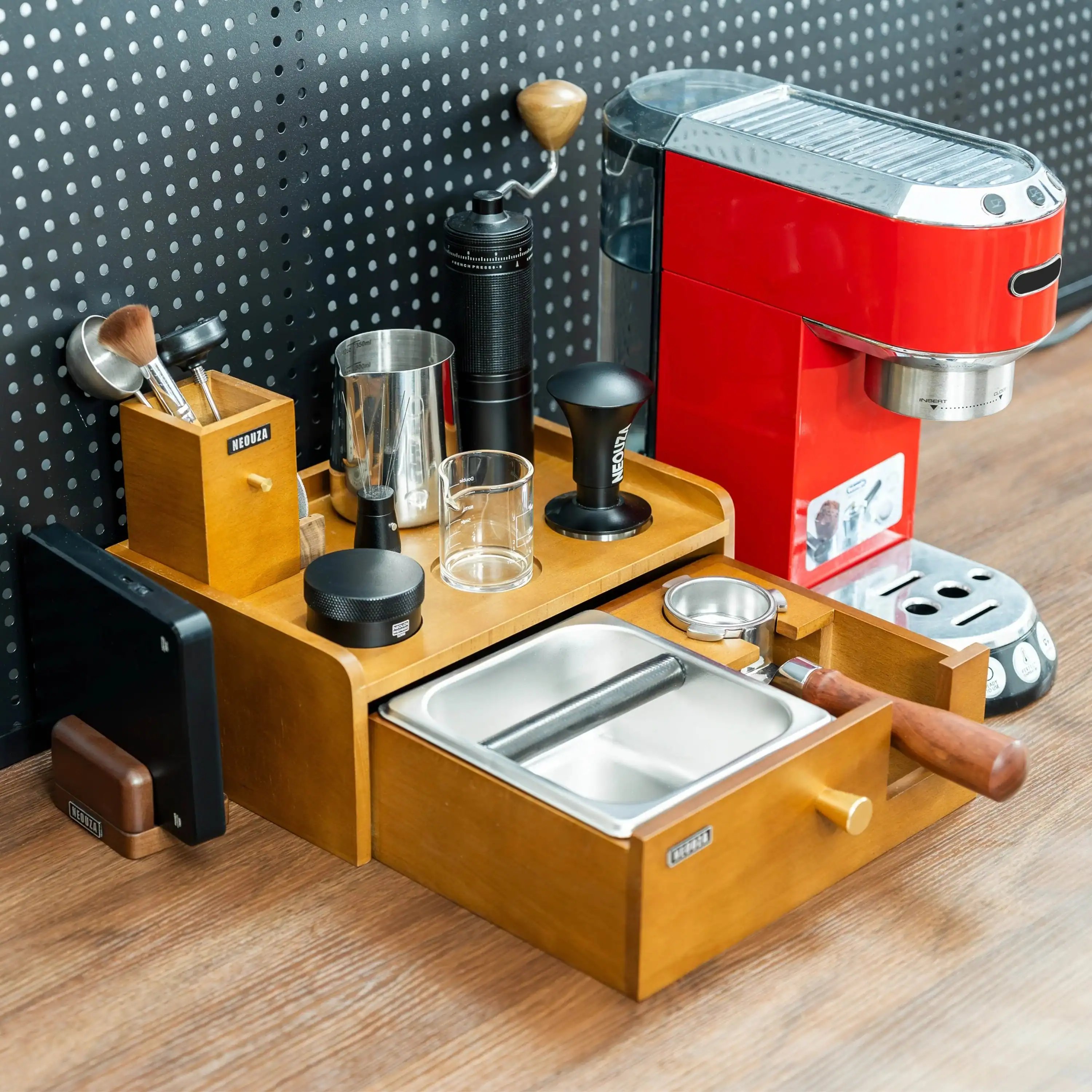
A knock drawer fully liberates countertop surface area while maintaining operational efficiency.
Drawer-Integrated Knock Box: A low-profile, reinforced metal drawer unit that allows the grinder to be positioned directly on top. This effectively reduces countertop footprint to zero while containing moisture and residual odor from spent grounds.
Floor-Standing Vertical Knock Tube: Installed beneath the counter, fully eliminating surface occupation and freeing 100% of usable workspace.
Cách mạng hóa khu vực nén (Tamping) như thế nào?
Placing the portafilter edge directly against a stone countertop risks surface abrasion and destabilizes compression, potentially leading to uneven puck density.
lệch.
- Corner Silicone Tamping Mat: Designed to wrap tightly around the counter edge, utilizing underused peripheral space while providing a stable vertical compression anchor.
- Folded Microfiber Method: A thick microfiber towel folded over the counter edge serves simultaneously as cushioning, cleaning cloth, and grounds catcher. After use, a simple shake restores surface cleanliness.
 Utilizing the counter edge as a tamping anchor provides stable vertical compression without occupying central workspace.
The Circulatory System of the Brewing Station: Cable Management and Maintenance
Even a visually refined coffee station loses structural integrity when entangled in exposed electrical wiring. Espresso machines and grinders are high-consumption devices (typically 1200W–2000W+). The coexistence of high-temperature pressurized water and electronic circuitry creates a highly sensitive operational environment.
- Cable Management: Use concealed cable channels along the wall base or beneath the counter to prevent visual and functional obstruction.
- Electrical Safety as Priority: Coffee preparation inherently involves boiling water and pressurized steam. Ensure outlets are protected by Ground Fault Circuit Interrupters (GFCI). If using a plumb-in espresso system, electrical and water lines must be clearly separated to mitigate risk.
- Ease of Cleaning Equals Ease of Maintenance: Designate a fixed location within the Wet Zone for a damp cloth (steam wand cleaning only) and a group head cleaning brush. Seamless maintenance integration ensures the brewing station remains hygienic, visually composed, and ready for the next extraction cycle.
You Are Now Ready for High-Performance Brewing!
Transforming a modest kitchen corner into a high-efficiency brewing station does not require structural renovation. It emerges from a refined understanding of biomechanics, flow dynamics, and the procedural minimalism inherent in Single Dose workflow.
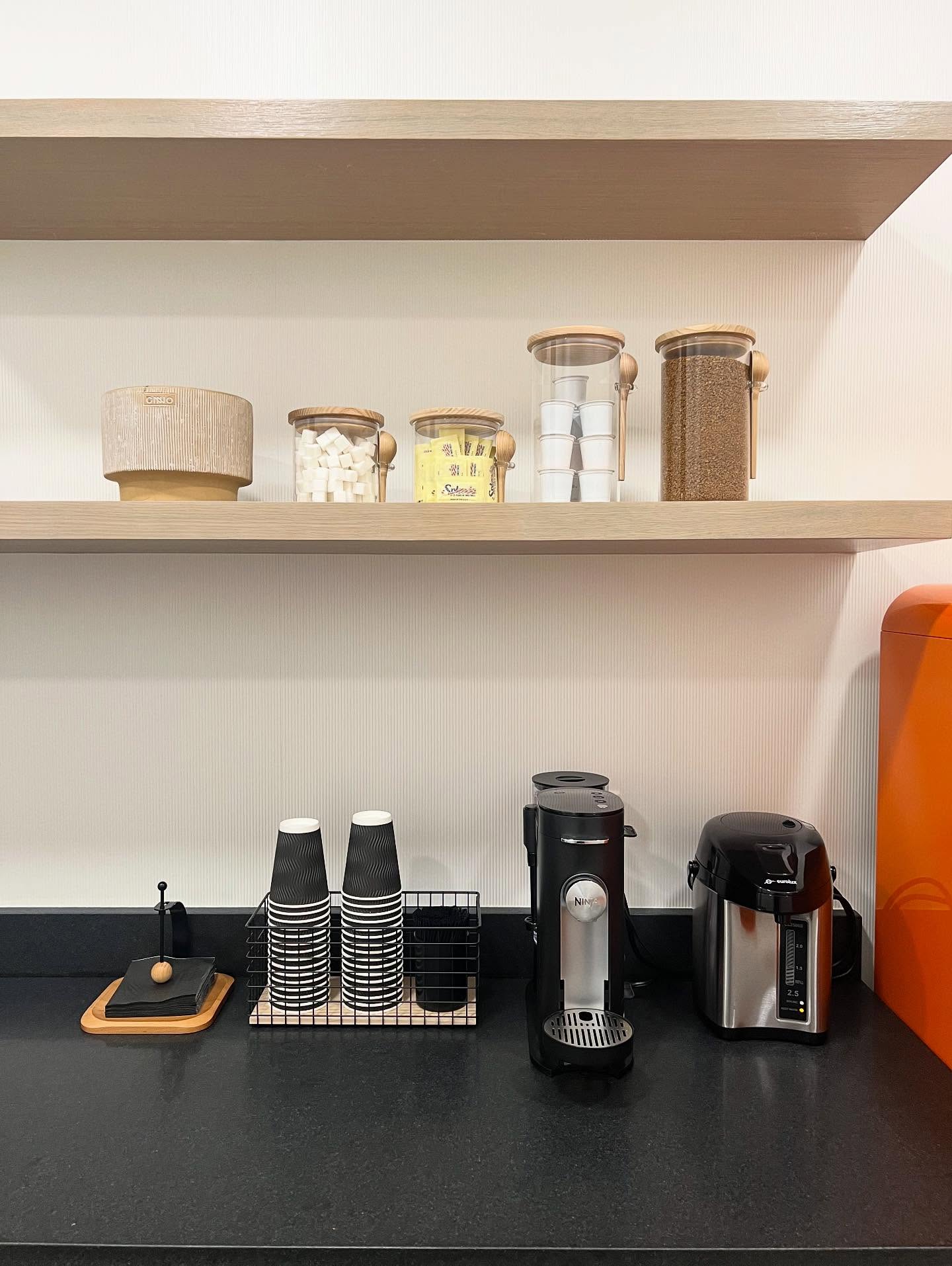
When every tool has its designated position, even a compact bar setup becomes a fully immersive brewing environment.
When each device occupies its optimal placement and every hand movement serves a defined mechanical purpose, physical space ceases to be a limitation. Instead, it becomes a precision instrument- supporting the pursuit of flavor complexity across diverse coffee profiles, including specialty coffee. At that point, each cup represents the convergence of art, science, and lived experience.
We look forward to exploring more advanced topics in upcoming coffee knowledge series.