Choosing Between the C40, Kinu, or 1Zpresso: Which Grinder Optimizes Home Coffee Extraction?
Whenever someone begins searching for a manual coffee grinder, the final stage of the upgrade journey and almost everdebateinevitably converges around three names: the Comandante C40, the Kinu M47, and the 1Zpresso ecosystem (most notably the K-Ultra or Q2 models).
The presence of this “holy trinity” represents three entirely different schools of mechanical engineering philosophy, where burr geometry and alignment precision directly shape both the flavor spectrum of the brewed cup and the smoothness of your daily workflow at a home brewing station.
Introduction to the Comandante C40, Kinu M47, and 1Zpresso
Before diving into technical analysis, let us first familiarize ourselves with these three giants through their defining characteristics:
- Comandante C40 (Germany): Often referred to as the icon of pour-over coffee brewing, the C40 carries a classic aesthetic with its wooden veneer body. It is renowned for producing exceptionally clean and transparent cups, allowing the inherent sweetness of coffee to shine with remarkable clarity.
- Kinu M47 (Germany): A true mechanical tank, constructed entirely from solid metal with impeccable machining quality. The Kinu M47 was essentially born to dominate the world of espresso, thanks to its ability to grind extremely fine and produce dense, syrupy extraction profiles.
- 1Zpresso K-Ultra (Taiwan): A modern challenger driven by engineering efficiency. The 1Zpresso lineup represents speed, ergonomic optimization, and innovative workflow design, helping users save significant time and effort during daily brewing routines.
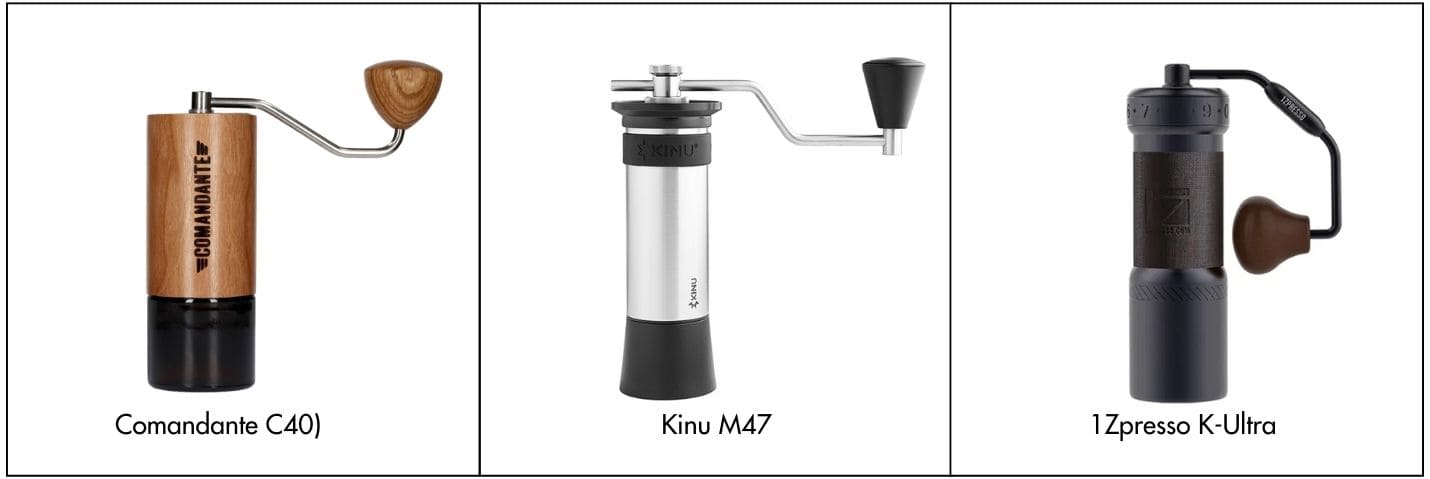
Three designs that represent three philosophies: classic craftsmanship, heavy-duty mechanical engineering, and modern technological optimization.
So what exactly gives these grinders their distinct strengths?The answer lies in their core mechanical component: burr geometry and how it interacts with hand-driven grinding dynamics.
Burr Geometry Differences: C40, Kinu, and 1Zpresso
Every roasted coffee bean must pass through the narrow gap between two serrated metal surfaces known as Burr Geometry. As a result, the most fundamental difference between high-end grinders lies in their burr architecture. The way these metal ridges interact with brittle roasted coffee beans ultimately determines the particle structure that defines extraction behavior.
The pentagonal blade gives the Kinu M47 its “crushing” power.
Imagine the burr set of the Kinu grinder as a mortar and pestle system. With a five-blade structure where the burr teeth are spaced relatively far apart, coffee beans are compressed and crushed more than they are cleanly sliced.
This characteristic generates a large quantity of fines – extremely small coffee particles resembling flour. For espresso brewing, this layer of fines is a priceless advantage. These particles fill microscopic gaps between larger grounds, forming a dense resistance layer that slows down high-pressure water flow, allowing espresso extraction to produce a thick crema layer and the familiar syrupy body.
However, during grinding, the five-blade burr geometry typically requires more rotational turns, even though the applied hand force remains relatively light.
The Heptagonal Burr: The “Slicing Machine” of C40 and 1Zpresso
In contrast, the seven-blade heptagonal burr design such as those found in the Comandante C40 and the 1Zpresso K-Ultra – features narrow cutting angles and extremely sharp edges.
It operates much like the knife of a master chef: cleanly slicing coffee beans into uniform fragments.
Because the grinding process relies on decisive cutting forces, the production of fines is minimized to the greatest extent possible, making this burr geometry particularly suitable for high-density light-roasted coffee beans. The trade-off, however, is that users must apply a stronger and more decisive hand force when turning the crank.

Burr geometry ultimately determines how coffee beans are processed – whether they are crushed, sliced, or fractured under pressure.
* Image source: Alternativebrewing
The Story of Fines and the Challenge of Light Roasts
In the world of coffee, there is an important metric known as PSD (Particle Size Distribution). To make it easier to understand, PSD is like slicing carrots: a grinder with good PSD would produce 100 carrot cubes that are nearly identical in size, with no oversized chunks and no mushy fragments.
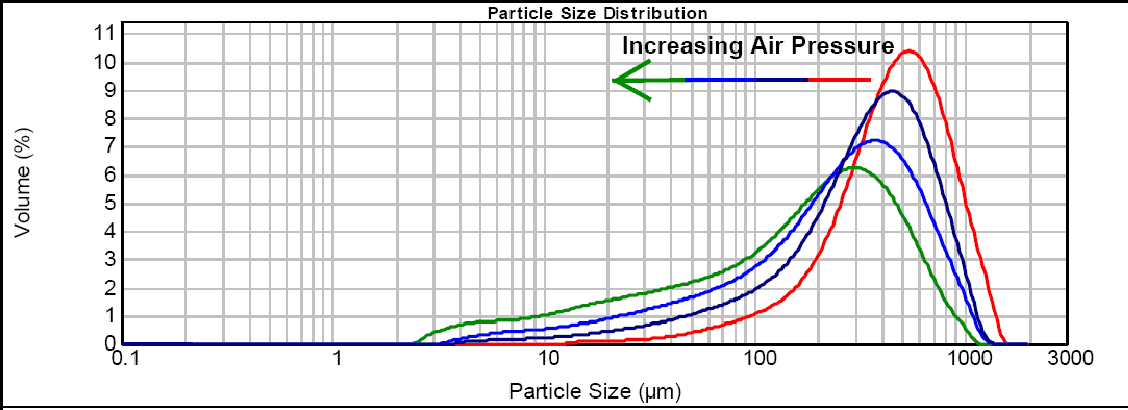
The more uniform the particle distribution, the more stable the water flow through the coffee bed becomes, allowing for a more complete extraction of the coffee’s flavor compounds.
* Image source: Particletechlabs
This uniformity becomes especially critical for light-roasted coffee beans a roast style known for floral aromatics and fruit-forward flavors but also for being extremely dense and difficult to brew.
If you use the Kinu M47 to grind light-roasted beans for pour-over brewing, the large amount of fines it generates will travel with the water flow and eventually settle tightly at the bottom of the filter bed. This phenomenon is known as fines migration. It behaves very much like sediment clogging a drainage pipe. Water can no longer flow properly, the coffee becomes over-immersed, and the brew extracts harsh bitterness that completely masks the delicate fruit characteristics of the coffee.
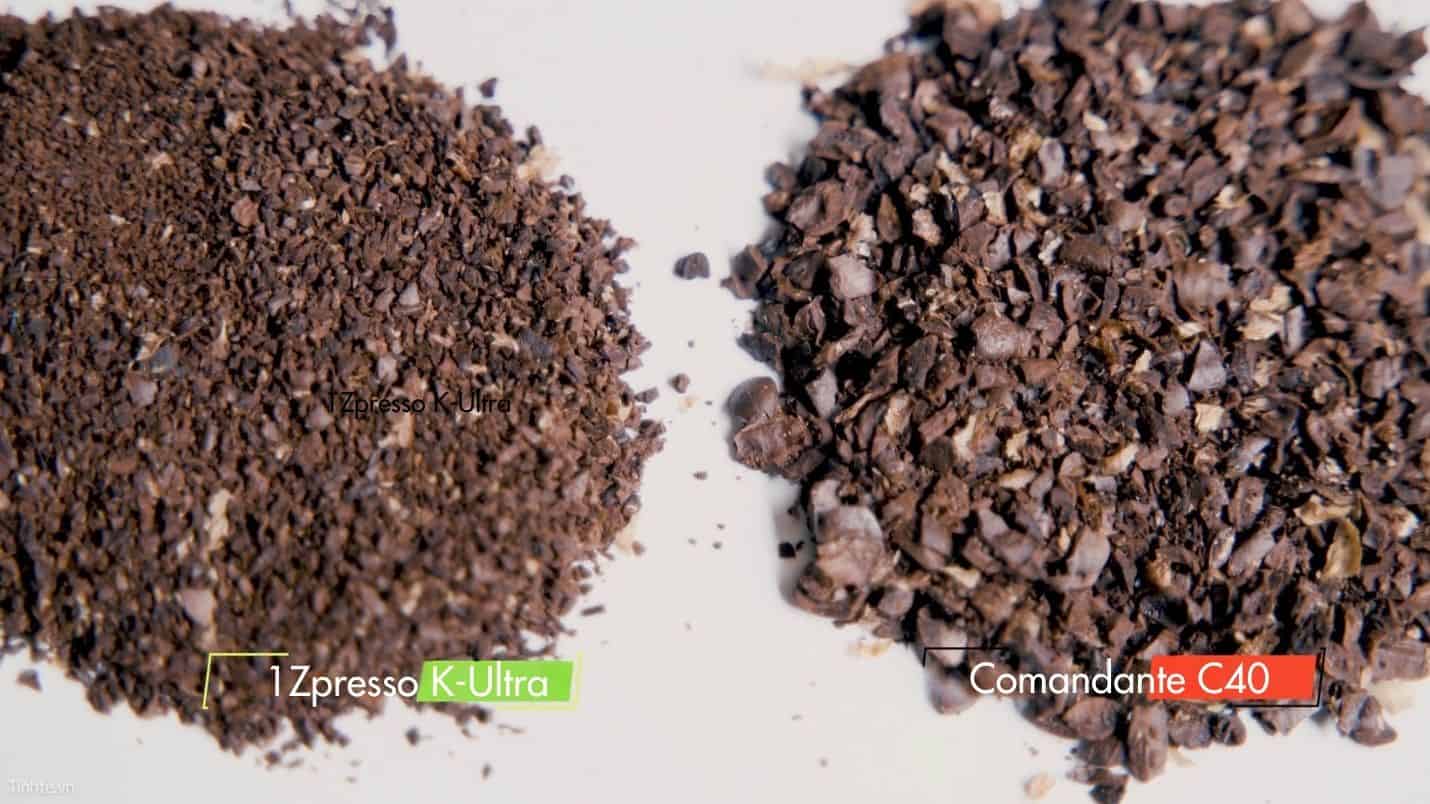
The comparison of Particle Size Distribution (PSD) between grinders clearly shows that the fewer fines present, the more stable the water flow during pour-over extraction, preserving the clarity of the final cup.
This is precisely why the Comandante C40 rose to legendary status. Thanks to its sharp seven-blade burr geometry, it produces extremely uniform particles while drastically reducing fines. Water flows smoothly through the coffee bed, resulting in cups with exceptional clarity and refined sweetness. The 1Zpresso K-Ultra follows closely behind with nearly identical particle uniformity. However, the flavor profile it produces tends to be slightly more vibrant and expressive, compared to the smoother and more elegant cup character of the C40.
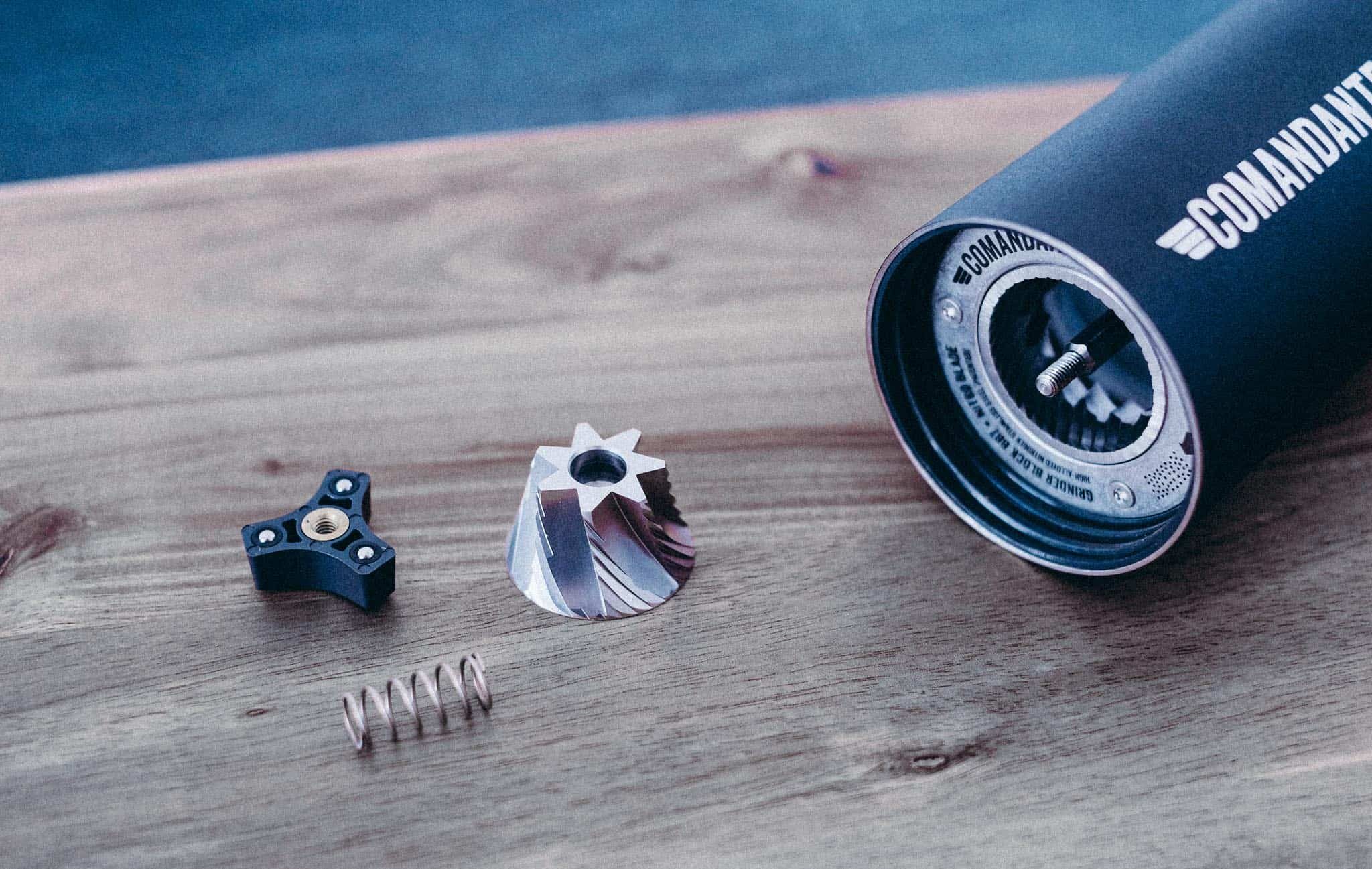
Thanks to its sharp heptagonal burr set and highly consistent PSD, the C40 enables stable water flow, producing cups with remarkable clarity and pronounced sweetness.
Of course, in order for particles to be cut evenly, the grinder’s central shaft must remain perfectly stable during rotation, without wobbling even by a fraction of a millimeter. This factor is known as alignment. All three grinders in this comparison achieve near-perfect alignment stability.
Ergonomics and Hand Dynamics When Choosing a Grinder
Now imagine placing these grinders inside your premium home brewing station. A truly ergonomic coffee setup demands fluid movement and the elimination of awkward or unnecessary steps.
Rotational Feel (Muscle Dynamics)
The Comandante C40 offers an exceptionally smooth grinding sensation. Even when grinding dense light-roasted beans that feel as hard as gravel, the crank rotates smoothly without any sudden kickback that might strain the wrist. However, the grinding speed of the C40 is relatively slow.

The C40 is famous for its incredibly smooth grinding feel, even when processing high-density light-roasted beans, although the grinding speed is somewhat slower compared with more modern designs.
* Image source: Thenobcoffee
In contrast, the 1Zpresso K-Ultra, equipped with a 48 mm burr set, is a true speed monster. It can grind beans nearly 1.5 times faster than the C40, saving significant time and physical effort during rushed mornings.
Eliminating Redundant Workflow Steps
This is where the C40 begins to reveal its traditionalist design philosophy. To adjust grind size for example, switching from pour-over to espresso you must unscrew the glass catch cup at the bottom, flip the grinder upside down, and manually count the adjustment clicks inside the mechanism. The threaded catch cup also requires repeated wrist rotations to open and close.
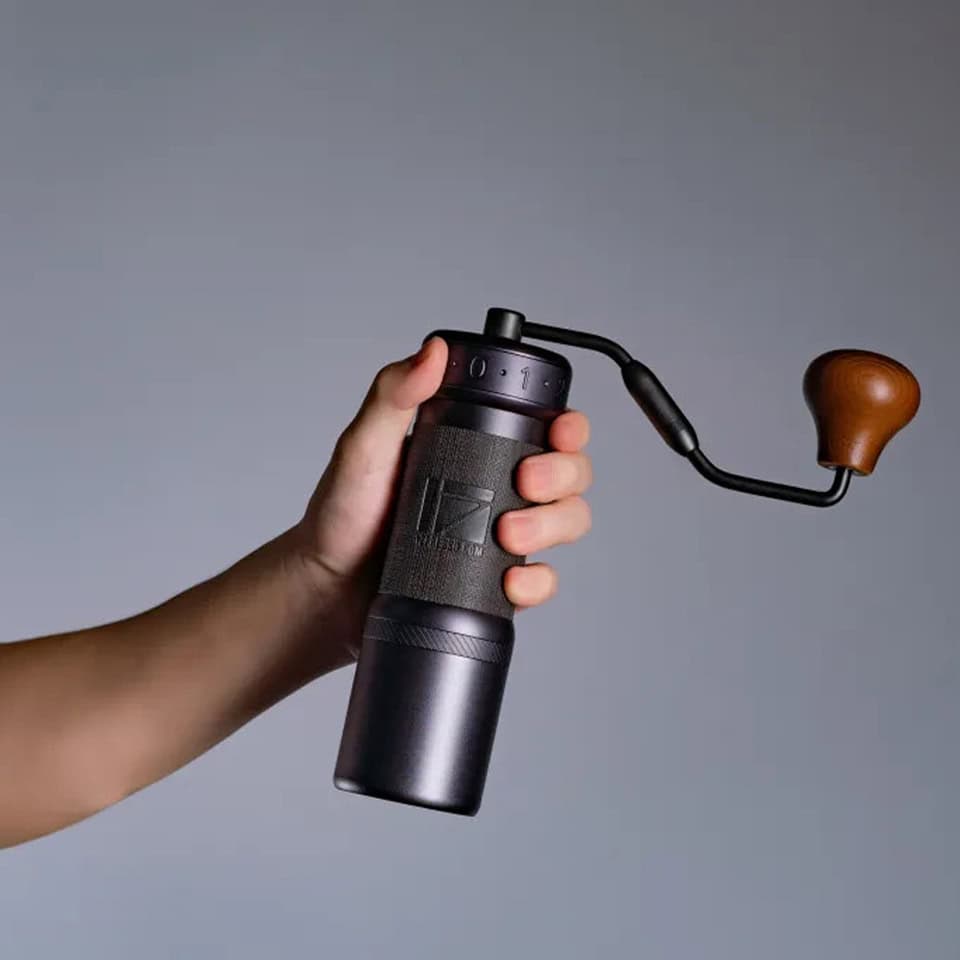
The K-Ultra, on the other hand, optimizes workflow with its external grind adjustment dial and magnetic catch cup, eliminating unnecessary steps and keeping the brewing rhythm smooth and uninterrupted.
* Image source: Frekko.nl
In contrast, the 1Zpresso K-Ultra truly represents the peak of motion economy. Its grind adjustment dial is located externally and clearly numbered, turning smoothly and intuitively – much like adjusting a camera lens. Even more innovative, the grounds catch cup uses magnetic attachment. Instead of struggling with threaded containers, a simple twist instantly releases the cup, allowing you to pour the grounds neatly into your portafilter or dripper. It perfectly follows the philosophy of “Mise en Place”: streamlined, precise, and free from unnecessary micro-actions that interrupt the rhythm of brewing.
So Which Grinder Should You Choose?
Ultimately, there is no universally perfect grinder, only the grinder that best matches your flavor preference and lifestyle.
- If your brewing station is primarily dedicated to espresso, and you enjoy dense, syrupy shots while not minding a heavier grinder and longer grinding time, the Kinu M47 remains an unbeatable mechanical tank.
- If you are a pour-over enthusiast, someone who appreciates craftsmanship, seeks the ultimate clarity of floral aromatics, and is willing to tolerate traditional and somewhat cumbersome adjustment methods, the Comandante C40 remains an enduring icon.
- But if you are looking for the perfect balance, love light-roasted beans, crave extreme grinding speed, and demand a smart, optimized workflow with no wasted movements in a compact brewing space, the 1Zpresso ecosystem becomes the final ergonomic piece that completes your home coffee station.
Have you already chosen your weapon for your coffee corner? We will soon return to explore how to select smart digital scales that perfectly complement these grinders.


-

XLIII Coffee – A quiet coffee shop for the “introverted” team in Hanoi
-
Can drinking coffee every day lower blood pressure?
-
The truth about high-quality specialty coffee
-
The taste of Finca Soledad Sidra changes in temperature
-
Don’t drink coffee like this if you don’t want to age quickly



SPECIALTY COFFEE