Qahwa Coffee – The cultural and health essence of the Arab world
From green coffee beans given a light roast to the sacred ritual of Arab hospitality, Qahwa coffee opens the door to a treasure trove of traditional medicine and profound culture. UNESCO recognized Qahwa as an Intangible Cultural Heritage in 2015, affirming its importance not merely as a beverage but as a symbol of community connection. Modern scientific research is gradually unveiling the remarkable health secrets hidden within every drop of this traditional coffee.
The historical origins of Qahwa coffee
The word “Qahwa” (قهوة) in ancient Arabic means “strength” or “energy,” from which it spread to become “kahve” in Turkish, “coffee” in English, and many other languages. Qahwa originated from the port city of Mokha in Yemen, then spread through Mecca, Egypt, the Levant, and finally reached Turkey in the mid-16th century.
What makes Qahwa unique lies not only in its historical origins but also in how it’s prepared and served. Families have passed down this tradition through centuries, and the effort put into each cup clearly demonstrates its deep cultural significance. The process of selecting the finest beans, carefully roasting and grinding them, brewing over fire, and serving in small, intricately decorated cups – all of this constitutes a sacred ritual.
How does Qahwa coffee differ from Western coffee?
Instead of using darkly roasted coffee beans at the standard three roast levels, Qahwa is made from Arabica beans that are very lightly roasted or even green beans at temperatures ranging from 165 to 210°C (329 to 410°F). The brewing process is also unique – rather than quick extraction like espresso, Qahwa is simmered for 15-20 minutes in boiling water along with natural spices.
The color of Qahwa ranges from pale yellow to light brown, completely different from the characteristic black of Western coffee. The primary flavor is a delicate combination of coffee’s mild bitterness, the warm aroma of cardamom, and other spices, creating an entirely new taste experience.
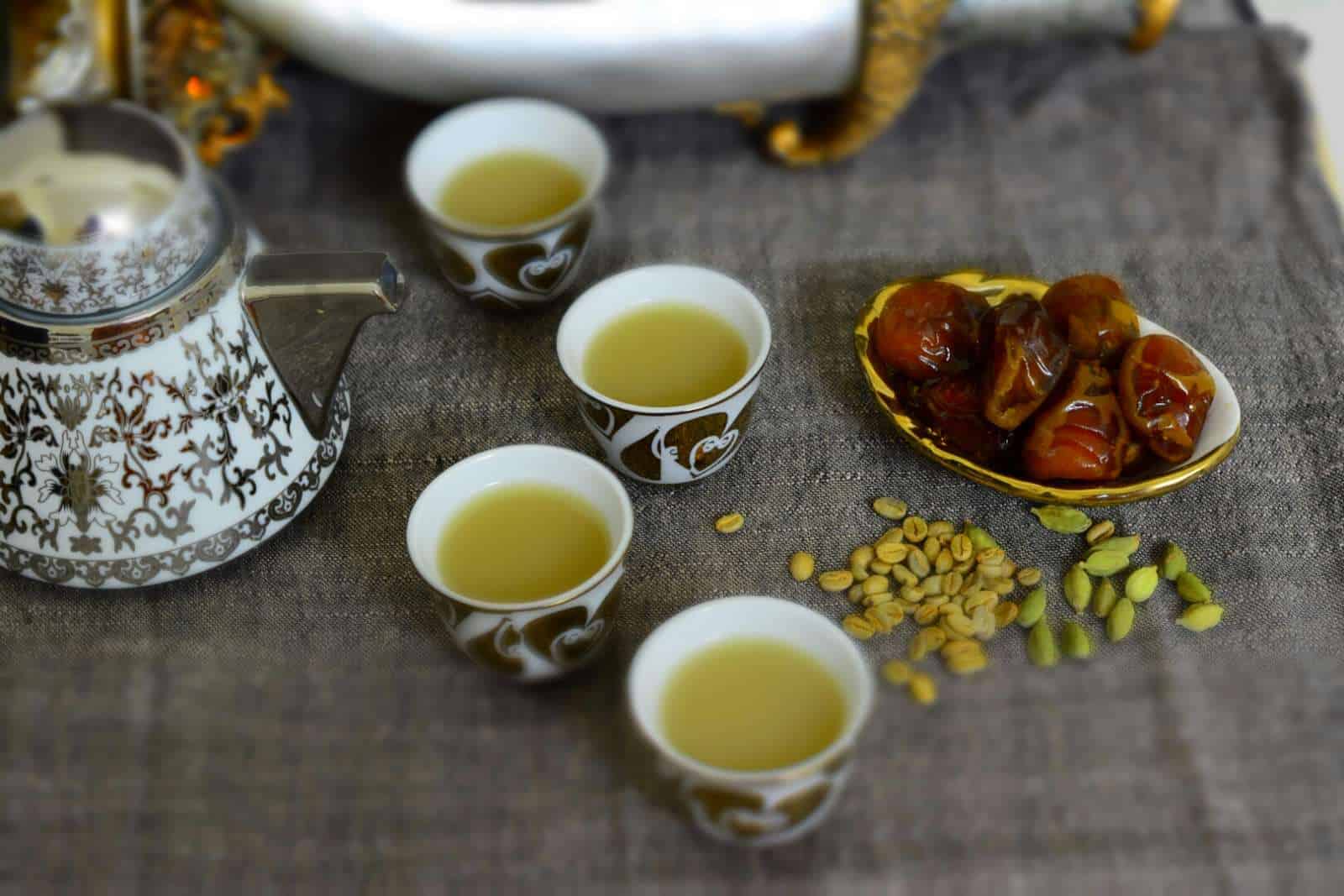
This difference is not merely aesthetic but profoundly affects nutritional value and health impact. Light roasting helps preserve many natural antioxidants, while the added spices bring scientifically proven medicinal benefits.
Arab rituals and spirit in Qahwa coffee preparation
Since Qahwa carries an identity that encompasses more than just a beverage, all activities surrounding it express a special language of communication, conveying respect and human connection.
- How is it prepared?
Qahwa is brewed in a dallah – a traditional coffee pot with a long spout and intricate decorative design. What’s special is that the host typically prepares the coffee right in front of guests to show respect and care, including roasting and boiling the coffee. When the coffee foam begins to rise, the dallah is removed from heat, then spices like cardamom, saffron, or cloves are added. Finally, the coffee is left to settle until the grounds sink to the bottom and it can be served.
- What are the service standards?
Coffee is first served to the most important person at the gathering, such as a religious scholar or Sheikh. The server, called a Muqahwi, must be at least 15 years old to interact politely with guests and avoid spilling the coffee.
The pouring method also carries special meaning. The dallah is held high and coffee is poured from height, creating a distinctive sound. This serves as a signal to guests that it’s time to relax and enjoy. The server stands while guests sit, demonstrating attentive service.
Guests must drink at least one cup to show respect, but shouldn’t exceed three cups in one sitting. When they want to stop drinking, guests simply shake the coffee cup gently – this is a silent signal that the host understands and respects.
- An important part of events
During significant events, Qahwa becomes the center of ceremony. At weddings, coffee is prepared and served in ways that emphasize the event’s importance, often with special spices and more elaborately decorated cups than usual.
During Ramadan, coffee may be specially prepared to become part of iftar – the important meal breaking the fast. Majlis, rooms specially designed for receiving guests with sofas or cushions, are places where coffee is always served and guests are expected to drink at least one to three cups.

The Qahwa ritual embodies a profound philosophy of hospitality and human connection. It’s not just about drinking coffee but creating a sacred space for exchange, sharing, and relationship building. In today’s busy modern world, these values become more precious than ever.
The nutritional value provided by spiced Qahwa coffee
Qahwa is a nutritional treasure with remarkable antioxidant content. What’s special is that the caffeine content in Qahwa is moderate – it doesn’t cause shock like espresso but is still sufficient to gently stimulate the nervous system.
| Main components | Hàm lượng | Effect |
| Antioxidants | Polyphenol, Vitamin E | Protects heart from inflammation |
| Vitamin B | B2, B5 (specific ratios) | Supports energy and metabolism |
| Minerals | Kali (3%), Magie (2%) | Balances electrolytes |
| Trace elements | Selenium, Zinc, Manganese | Boosts immunity |
| Caffeine | Moderate level | Gentle stimulation |
The mechanism of action is explained by cardamom in Qahwa having anti-inflammatory effects, reducing blood pressure and protecting against cancer cell development through improving blood vessel endothelial function.
Qahwa not only protects the heart but also has significant positive effects on the nervous system. Research on fractional exhaled nitric oxide (FENO) levels shows that drinking Qahwa significantly reduces FENO levels after 30 minutes, with a reduction effect of over 20%. Simply put, coffee components have positive effects on conditions like neuroinflammation, memory enhancement, and reducing depression intensity.
More specifically, caffeine in Qahwa is proven to be one of the most effective natural substances for supporting weight loss, no different from other coffee varieties in the broader coffee world.
The true secret of Qahwa lies not only in the coffee beans but also in the sacred spices added. Each spice not only creates unique flavors but also brings scientifically proven health benefits. These are cardamom, saffron, and cloves.
Experts typically recommend caution when using more than 3 grams of cardamom daily, as there’s limited long-term research on the effects of high cardamom doses on humans. Similarly, using up to 1.5 grams of saffron daily is generally considered safe, but excessive consumption can be toxic.

The delicate combination of spices in Qahwa not only creates distinctive flavors but also provides a natural “cocktail” of health-beneficial compounds. This is why Qahwa is not just a beverage but a natural remedy tested through thousands of years of history.
Would you like to try?
The specialty coffee trend is opening opportunities for Qahwa to reach global consumers. Arabic and Turkish coffee can now be found in specialty coffee shops from London to Los Angeles, with baristas adapting traditional methods to suit modern tastes and equipment.
For those wanting to experience Qahwa at home, you can start with a simple recipe: use 1 teaspoon of lightly roasted coffee grounds per 150ml (5 fl oz) of water, add 1/4 teaspoon of ground cardamom and a pinch of saffron. Simmer for 10-15 minutes, let it settle, and enjoy in small cups alongside dates or sweets. Give it a try!
Images used in this article are collected from various sources.
Frequently asked questions
1. Are there any side effects to drinking Qahwa?
According to doctors and experts, a person should not consume more than three cups of Qahwa daily. People with high blood pressure or heart disease should avoid excessive use as it may increase blood pressure and risk of heart attack.
2. What are the benefits of cardamom in Qahwa?
Scientific research shows that cardamom can reduce blood pressure, fight inflammation, and protect cardiovascular health. It contains 1,8-cineole and terpenes with strong antioxidant properties, while also helping improve digestion and respiration.
3. When is the best time to drink Qahwa for health benefits?
The ideal times are after breakfast and in the afternoon to take advantage of its metabolism-boosting effects. Avoid drinking on an empty stomach or before sleep as caffeine can affect sleep quality.
4. Is Qahwa suitable for people with diabetes?
Research on 204 type 2 diabetes patients shows that Qahwa may help balance blood sugar levels and increase insulin sensitivity. However, patients should consult their doctor before regular use.


-

The interesting steps of making Neapolitan Flip coffee
-
How to brew a budget-friendly home Turbo Shot Espresso?
-
4C Coffee Production: Meeting EU Deforestation Regulation Requirements
-
IMMERSION HAND BREWING – THE SCIENCE OF ARTISTS
-
Suffering from headaches when you stop drinking coffee, do you know the reason?





SPECIALTY COFFEE