Is Purple Ube Coffee Really Delicious and Nutritious?
The unique combination of Southeast Asian purple yam and coffee has created a beverage that’s both familiar and exotic, capturing the attention of coffee enthusiasts and those seeking new flavor experiences alike. But how good is ube coffee really?
What exactly is ube coffee?
Ube coffee is made by combining coffee with a special ingredient from the Philippines – ube (Dioscorea alata) – also known as purple yam, a tuber beloved throughout Southeast Asia. Beyond its distinctive purple color, ube offers a subtly sweet, earthy flavor with delicate nutty notes.
In Filipino culture, ube serves both as a culinary ingredient and as a symbol of creativity and cultural identity. The combination of ube with coffee reflects the growing global trend of fusion cuisine.
How does ube coffee differ from traditional coffee?
According to market research, ube (purple yam) is listed among the unique flavors gaining attention, alongside the trend of coffee combined with superfood ingredients like adaptogens, collagen, and antioxidants.
Flavor Profile
| Traditional coffee | Ube coffee |
| Often bitter when dark roasted, pure coffee flavor | Subtly sweet, earthy with vanilla notes |
| Strong, bold aroma | Complex, refined fragrance |
| Slight acidity in light roasts | Creamy, smooth, smoothie-like texture |
Visual Appeal
- Regular coffee: Familiar brown-black color (amber for specialty light roasts)
- Ube coffee: Distinctive purple color from natural anthocyanins, creating an impressive visual effect
Texture
Ube brings a uniquely creamy, smooth texture that transforms coffee from a simple beverage into a multi-sensory experience. This aligns with the trend of coffee becoming performance art, where preparation and presentation become as important as flavor itself.

This difference isn’t just about taste – it represents a new culinary philosophy: combining tradition with innovation to create unique experiences for today’s consumers.
Unique health benefits from ube
The wellness coffee trend is reshaping the global coffee market. Approximately 82% of American consumers consider health their top priority, and ube coffee perfectly fits this trend. Similar to Indonesian avocado coffee (Es Alpukat Kopi), ube’s superior nutritional values include:
- Vitamins and minerals from root vegetables, supporting both vision and immune system health
- Antioxidant anthocyanins naturally present to protect cells from damage and help reduce inflammation
- Natural fiber from the yam helps improve digestion, increases satiety, and aids in effective weight management
What’s particularly important is that ube provides a caffeine-free option for those wanting to reduce caffeine while still enjoying rich flavors. This is a significant competitive advantage as functional beverages become increasingly popular.
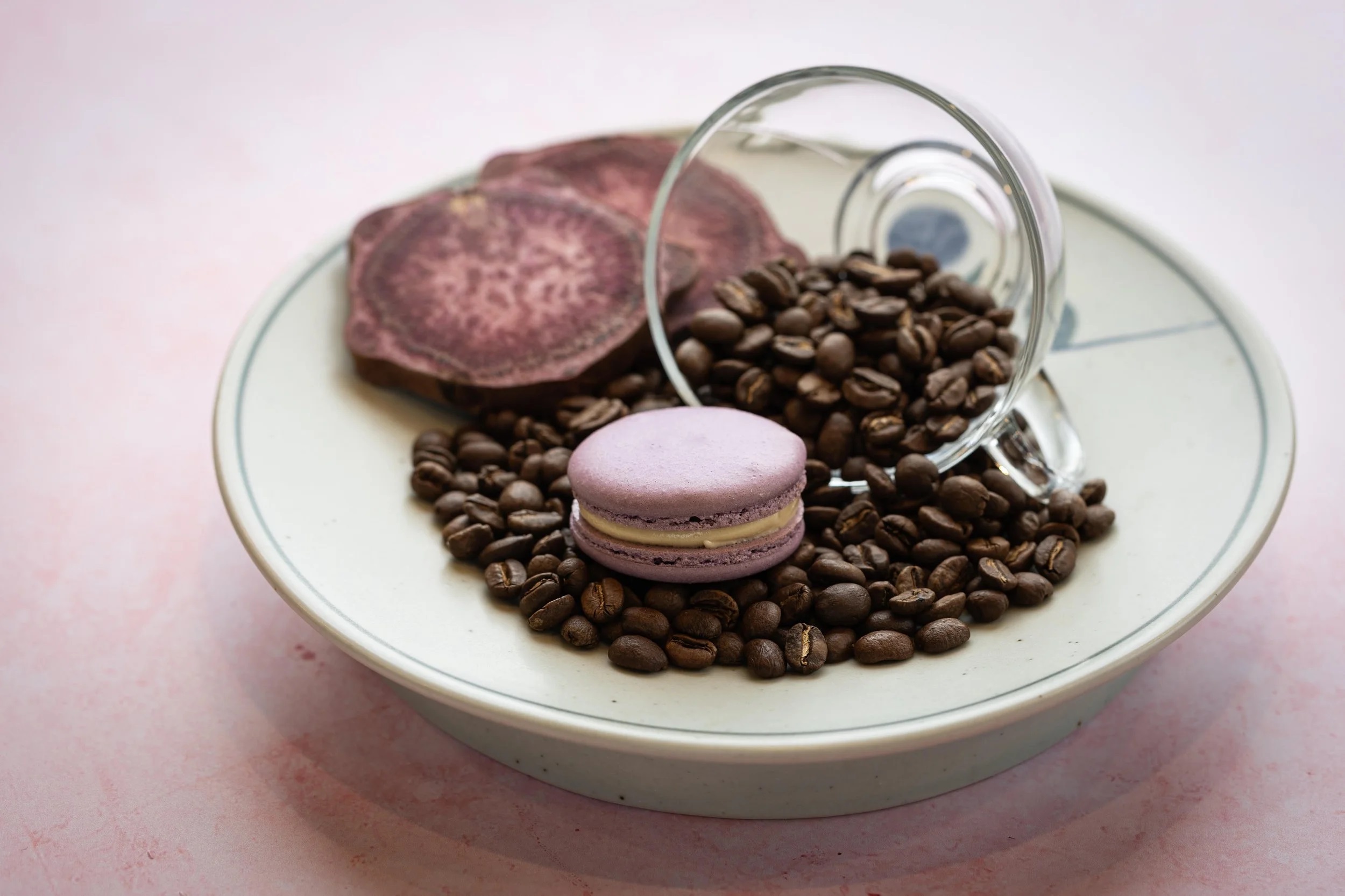
Combining these health benefits with unique flavors, ube coffee isn’t just a temporary trend but has the potential to become a long-term choice for health-conscious consumers.
How to make ube coffee at home
Making ube coffee at home not only saves money but also allows customization to personal preferences. With just three basic ingredients – purple yam extract, milk, and coffee – you can create the perfect ube coffee.
Basic recipe – Iced Ube Latte
Ingredients:
- 1/8 teaspoon ube extract (adjust to taste)
- 1 cup fresh milk or plant-based milk (240ml)
- 2 shots espresso or 1/4 cup strong coffee
- Ice cubes
- Sugar or simple syrup (optional)
Instructions:
- Create ube milk: Mix ube extract with milk in a separate cup, stir well
- Prepare glass: Add ice to a tall serving glass
- Pour slowly: Pour ube milk over ice
- Create coffee layer: Pour espresso/coffee on top, aiming for the ice to create beautiful layering
- Enjoy: Stir well before drinking
You can also try an advanced version called Ube Cold Foam by combining 2 tablespoons heavy cream, 2 tablespoons coconut milk, and 1/4 teaspoon ube extract, then using a milk frother until desired consistency is reached.

The home brewing trend is becoming increasingly popular, meeting the need for café-style coffee experiences without high costs or complex preparation. Mastering the ube coffee recipe at home not only satisfies culinary passion but also opens up endless creative opportunities.
Try making yourself a beautiful purple coffee!
Are you a trendy and versatile lifestyle enthusiast who enjoys diverse flavors? Along with matcha, egg coffee, coconut coffee, and others, ube coffee could be the ideal choice for the next 5-10 years, especially in dynamic Asian markets. Why not get ahead of the trend starting now?
Images used in this article are collected from various sources.
Frequently Asked Questions
1. Does ube coffee actually contain real purple yam?
Most commercial ube coffee uses ube extract (often artificial) instead of real purple yam to ensure color and flavor consistency. However, premium versions may use natural ube halaya (purple yam jam).
2. Does ube coffee have more caffeine than regular coffee?
No, caffeine content depends on the amount of coffee/espresso used, not the ube. Ube only provides flavor and color.
3. How can you identify quality ube extract?
Quality ube extract has a deep natural purple color, mild pleasant aroma without harshness, and creates an even purple color when mixed with milk. Butterfly and McCormick brands are highly rated.
4. Is ube coffee suitable for vegans?
Yes, depending on the type of milk used. Replace dairy milk with oat milk, almond milk, or coconut milk for a completely plant-based version.
5. How long can pre-made ube coffee be stored?
Ube milk mixture can be refrigerated for 2-3 days, but it’s best to make fresh for optimal flavor. Ube cold foam should be used immediately after preparation.


-

43 FACTORY COFFEE ROASTER WILL ALWAYS HAVE WONDERFUL FRIENDS
-
43 FACTORY COFFEE ROASTER – FIND THE ORIGIN
-
Unlocking Robusta’s Potential: WCR Embarks on Advanced Breeding Research
-
Is AC1 coffee really a natural coffee without caffeine?
-
What will global coffee consumption look like in 2023/24 when 2022/23 consumption drops sharply?



SPECIALTY COFFEE