Plant milk opens up new experiences for global coffee
Human dietary habits are undergoing a profound shift as plant-based milk gradually replaces the long-standing dominance of cow’s milk. This movement is not only driven by individual preferences but also linked to health and environmental concerns, opening a new era for the global dairy industry.
The plant-based milk market booming worldwide
Consumers across the globe are increasingly moving away from animal-based dairy to embrace plant-based alternatives, commonly referred to as nut or grain milk. What started as a personal choice has now become an inevitable trend, predicted to reshape the entire structure of the traditional dairy industry.
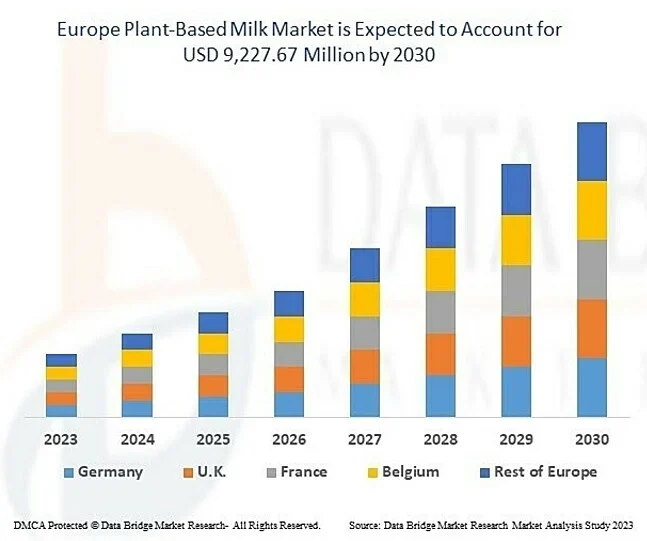
According to the latest market reports, the global plant-based milk market value in 2025 is projected to reach around USD 21.9 billion, with a compound annual growth rate (CAGR) of over 9% between 2025 and 2035. Oat milk, soy milk, almond milk, and other traditional plant-based varieties are not only gaining traction in Europe but are also expanding rapidly in North America, China, and many other countries.
Plant milk and its journey to becoming a popular global choice
A notable example of this rapid growth is Oatly, a Swedish brand known for its oat milk products tailored for Barista coffee preparation. While Oatly continues to post impressive growth in Europe with Q2/2025 revenue rising over 12%, the company still struggles to meet surging demand in North America and China, illustrating the overwhelming consumer shift toward milk alternatives.
Plant-based milk as an essential choice for health and sustainability
Biologically, about 65% of the global adult population is lactose intolerant, meaning they lack sufficient lactase enzyme to digest lactose in cow’s milk. This condition often leads to digestive discomfort such as bloating, abdominal pain, and diarrhea after consuming dairy. This is the primary reason why demand for lactose-free options, especially plant-based milk, is growing rapidly and becoming increasingly mainstream.
Beyond individual health, the dairy cattle industry places heavy pressure on the global environment. Recent studies show that dairy farming contributes approximately 4% of total global greenhouse gas emissions, consumes billions of cubic meters of water and vast areas of arable land, while also accelerating biodiversity loss and environmental pollution. These challenges are compelling both consumers and businesses worldwide to reconsider their choices and shift toward more sustainable alternatives.
XLIII Coffee pioneering a new sustainable direction
In Vietnam, XLIII Coffee (43 Factory Coffee Roaster) has embraced this trend by replacing cow’s milk entirely with oat milk, a 100% vegan ingredient free from animal-based products. This is not merely a change in flavor but a profound commitment to supporting customers in building a healthier, more sustainable, and planet-conscious lifestyle.
Leading the trend of the third wave of coffee in Vietnam, XLIII Coffee also appreciates new trends, but they must be sustainable and positive. XLIII Coffee quickly accepted this trend and chose to completely replace cow’s milk with oat milk, a 100% vegan ingredient that does not use animal milk. This is not simply a change in taste, but a deep commitment to accompanying customers in building a healthy, sustainable and responsible lifestyle for the planet.

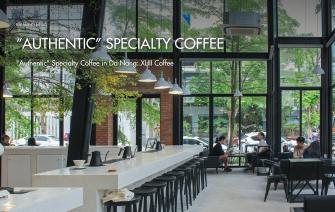
Located at Lot 422, Ngo Thi Si Street, Ngu Hanh Son District, Da Nang, XLIII Coffee is an unmissable destination for those who love coffee and care about health as well as the environment. Each cup of coffee here is both a sensory journey and a cultural expression of modern sustainable living.