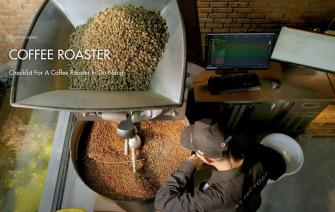
A few things to keep in mind when grinding coffee
In the entire specialty coffee brewing process, grinding the coffee is the most crucial transition between potential and reality. From the moment the coffee bean leaves its raw state to become ground powder, all flavor characteristics begin to enter the extraction process. Therefore, the quality of the grind and the role of the coffee grinder are not only technical but also directly shape how the flavor appears in the cup.

One of the first things to understand is the presence of fine particles in the coffee grinding process . In reality, no grinding process completely eliminates these particles. They always appear in very small sizes, have a large surface area, and dissolve quickly. The issue isn’t whether the fine particles are “good” or “bad,” but rather how they are managed by the coffee grinder and incorporated into the overall grind structure.
When properly controlled, fine grind contributes to sweetness, body, and a rounded mouthfeel. When excessive, it can make the coffee taste harsh or dry. However, the feeling of over-extraction doesn’t usually stem solely from over-grinding, but from an imbalance between roast level, water temperature, and extraction time. In this context, grinding coffee should be understood as part of a system, not a separate variable.

Besides average size, particle size distribution is a crucial factor determining the quality of coffee grinding. A good coffee grinder not only produces the correct fineness of the powder but also maintains a stable particle structure, ensuring consistent extraction. When particle distribution is uneven, the resulting coffee is likely to be both weak and bitter, as the dissolved particles do not dissolve in sync.

The alignment of the grinding system is an often overlooked factor that profoundly impacts the results. Even a very small misalignment in the grinder’s structure can alter how the beans are ground and cut, leading to distortion in particle size distribution. When grinders are not precisely aligned, the same grind setting can produce completely different powder textures between grinds, reducing repeatability – a core requirement in specialty coffee.
The temperature generated during the coffee grinding process is also a factor to consider. Friction between the beans and the grinding blades creates heat, and high temperatures can destroy volatile aromatic compounds, especially with light-roasted coffee. In continuous grinding sessions, heat buildup in the grinding chamber can affect the aroma even before brewing begins. Therefore, coffee grinders need to be not only precise but also maintain temperature stability.
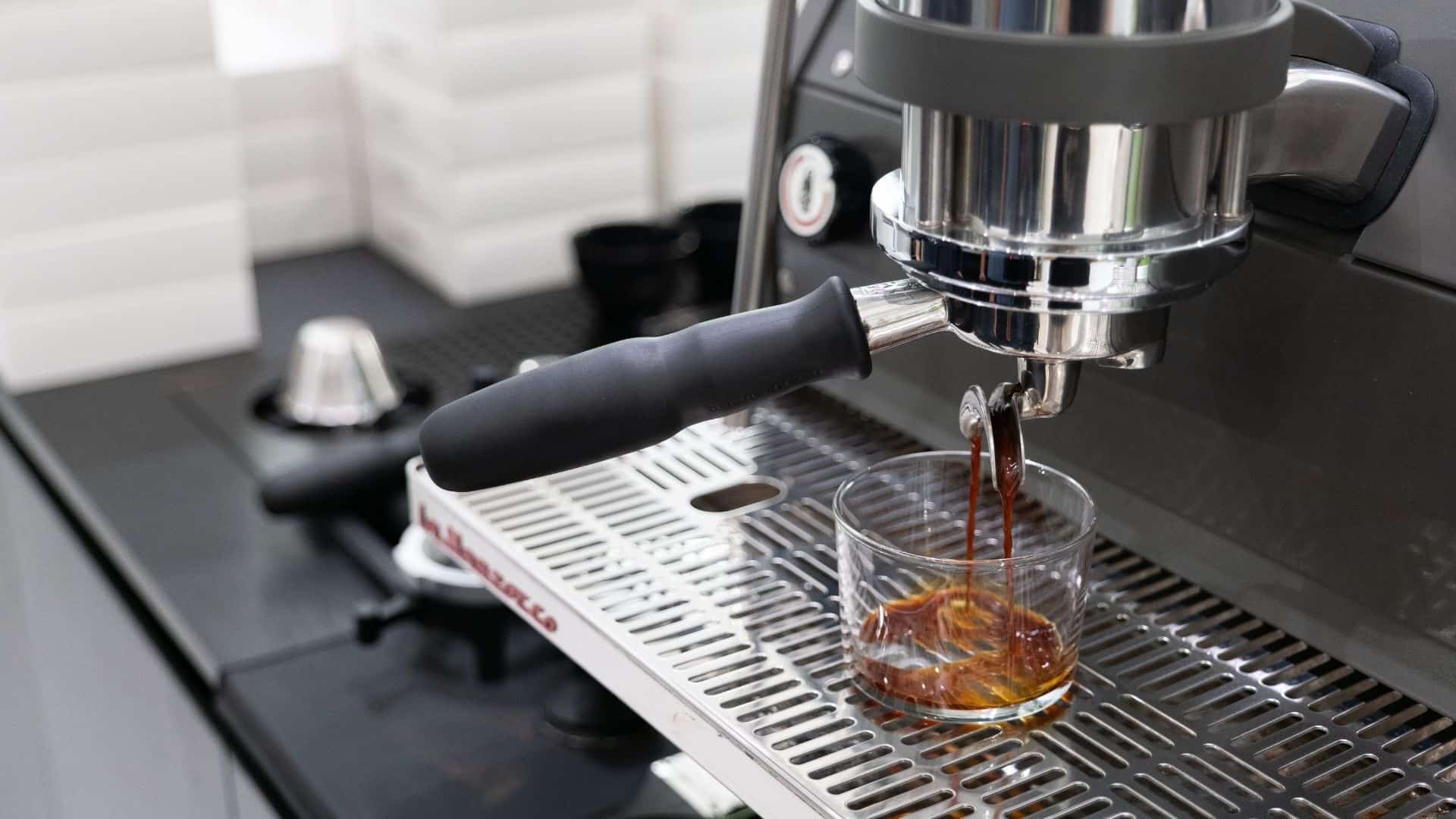
Coffee grinding is not an independent process. It is always closely related to the brewing method , brewing ratio, and water quality . A grind level only becomes “right” when placed in the correct extraction context. Instead of searching for a fixed parameter, understanding how the coffee grinder affects the flow, time, and structure of the extraction will help baristas proactively adjust it to achieve their desired cup of coffee.
At this level, grinding coffee is no longer a mechanical operation. It becomes part of a language of flavor, where the coffee grinder acts as the most honest interpreter of what the coffee bean carries from its growing region, processing method, and roasting technique.