Collection of sustainability certifications in the coffee world
The global coffee industry is increasingly focused on sustainability to ensure long-term benefits for all parties in the supply chain. Sustainability certifications are designed to guide farmers, businesses and consumers to work together towards a transparent, fair and responsible coffee industry.
This is the collection that coffee lovers pursue, both enhancing product value and contributing to improving farmers’ lives, protecting the environment and developing the community.
HACCP
HACCP (Hazard Analysis and Critical Control Points) is a globally recognized food safety management system that helps detect and control potential hazards throughout the production process – from raw materials to finished products.

In the coffee roasting industry, applying HACCP means closely monitoring the entire process chain: from bean selection, roasting, packaging to storage. All biological (bacteria, mold), chemical (pesticide residues) or physical (dust, impurities, scrap metal) risks are actively controlled.
HACCP certification is not only a sign of food safety and hygiene, but also creates trust with customers and partners, and opens up opportunities to access high-end distribution channels such as supermarkets, restaurants or hotels.
ISO 22000 & ISO 9001
The two most important ISO certifications in the food industry, including coffee, are ISO 22000 and ISO 9001.
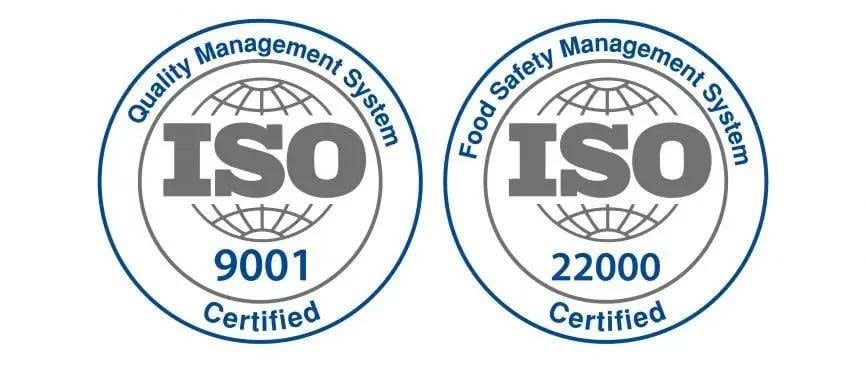
- ISO 22000 is a food safety management system standard that incorporates HACCP principles, ensuring that the final product is safe for consumers. The standard covers the entire supply chain – from farm to coffee table – including processing, storage and transportation.
- ISO 9001 is a comprehensive quality management standard that focuses on consistency, continuous improvement, and customer-centricity. For roasters, ISO 9001 helps standardize all processes from order receipt, production, to delivery, ensuring products always meet the quality as promised.
When a facility achieves both ISO 22000 and ISO 9001, it is a testament to professional operations, thorough investment and responsibility to consumers.
Rainforest Alliance
Rainforest Alliance is a well-known international certification in the coffee industry, recognized by the green frog symbol. This certification is based on three main pillars: environmental, social and economic.
- Forest and ecosystem protection : Farms are not allowed to deforest, maintain biodiversity and apply farming methods suitable to soil and climate.
- Improve farmers’ lives : Ensure workers’ rights, minimum wages, safe working conditions and no child labor.
- Sustainable farming : Encourage organic fertilizers, reduce toxic chemicals, optimize water and energy.
Rainforest Alliance coffee is favored by markets such as the US and EU, not only because of the quality of the beans, but also because it reflects social responsibility and planet protection – a great advantage for brands aiming for sustainable development.
4C Common Code
4C (Common Code for the Coffee Community) is the first set of standards aimed at sustainable development in the coffee chain, applicable to all links: farmers, purchasing organizations, processors, roasters and exporters.
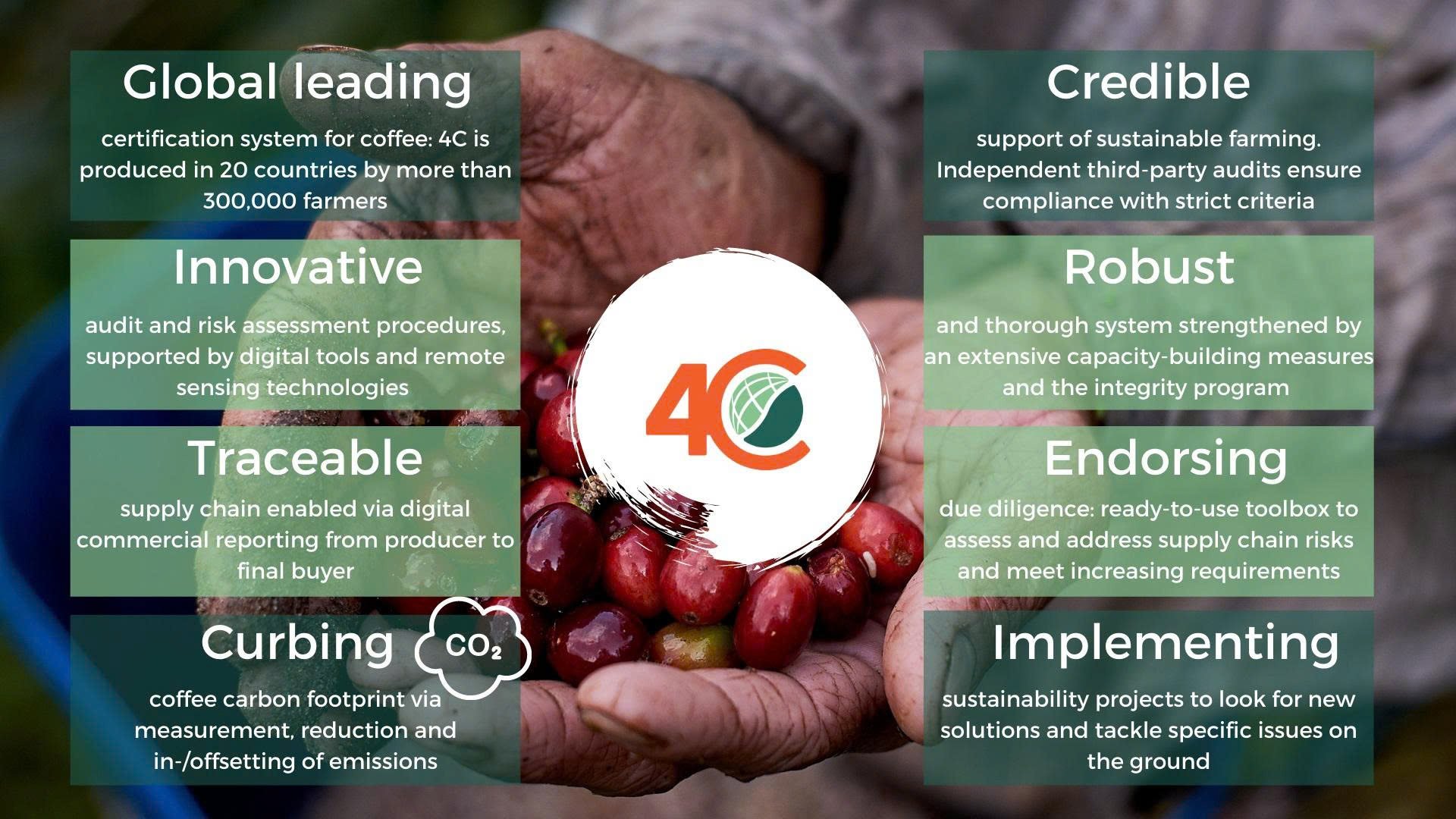
Main criteria:
- Environmental protection : No deforestation, rational use of land and water and conservation of biodiversity.
- Respect for human rights : Protect workers, eliminate child labor, ensure safety and fairness.
- Improve production efficiency : Encourage modern farming techniques, effective farm management, increase farmers’ income.
In Vietnam, especially in the Central Highlands (Dak Lak, Lam Dong, Gia Lai), many Robusta farmers apply 4C, helping to improve quality and expand export capabilities to the EU, Japan, and Korea.
UTZ Certified
Utz focuses on transparency and traceability in the supply chain, as well as improving economic efficiency through productivity and professional farm operations.

Participating facilities must comply with:
- Farm Management : Keep detailed records of production and distribution processes.
- Social security : No child labor, committed to humane working conditions.
- Environmental management : Sustainable resource use, soil protection.
Note: The Utz certification merged with the Rainforest Alliance in late 2017. The merged organization is called the Rainforest Alliance and focuses on issues of climate change, deforestation, poverty, and unsustainable farming. Through a single certification, the two organizations hope to simplify the certification process for farmers and empower companies to build more responsible and efficient supply chains.
USDA ORGANIC
USDA Organic certification is the most closely monitored and controlled food system in the United States. USDA Organic certification was created to create a verifiably sustainable agricultural system that produces food in harmony with nature, supports biodiversity, and enhances soil health. Coffee sold as certified organic in the United States must be produced according to standards established by the USDA National Organic Program.
Requirements of the organic seal include
- No use of pesticides, chemical fertilizers or growth stimulants.
- No genetically modified organisms (GMOs) used.
- There is a process of crop rotation, intercropping shade trees and protecting the ecosystem.
Environmental, farm, and production standards are the criteria for the existence and development of USDA Organic. This certification is reviewed annually by the organization’s experts.
Fair Trade
In the United States, there are three main certifications for products that meet fair trade conditions: Fair Trade USA, Fairtrade America (a member of Fairtrade International), and IMO Fair of Life.

When a coffee product carries Fair Trade certification, it means:
- Farmers are guaranteed a stable minimum price, despite market fluctuations.
- Part of the revenue is reinvested in the community (schools, health stations, clean water).
- Promote transparency, fairness and sustainable development throughout the chain.
Fair Trade Certified was developed to promote the economic, social and democratic significance of coffee production and consumption. Active communication efforts are made to promote consumer recognition and identification of this certification. Fair Trade certification is carried out annually.
Sustainability certifications help elevate coffee quality, protect the environment, improve farmers’ lives, and provide consumers with a premium taste experience that is socially responsible.